
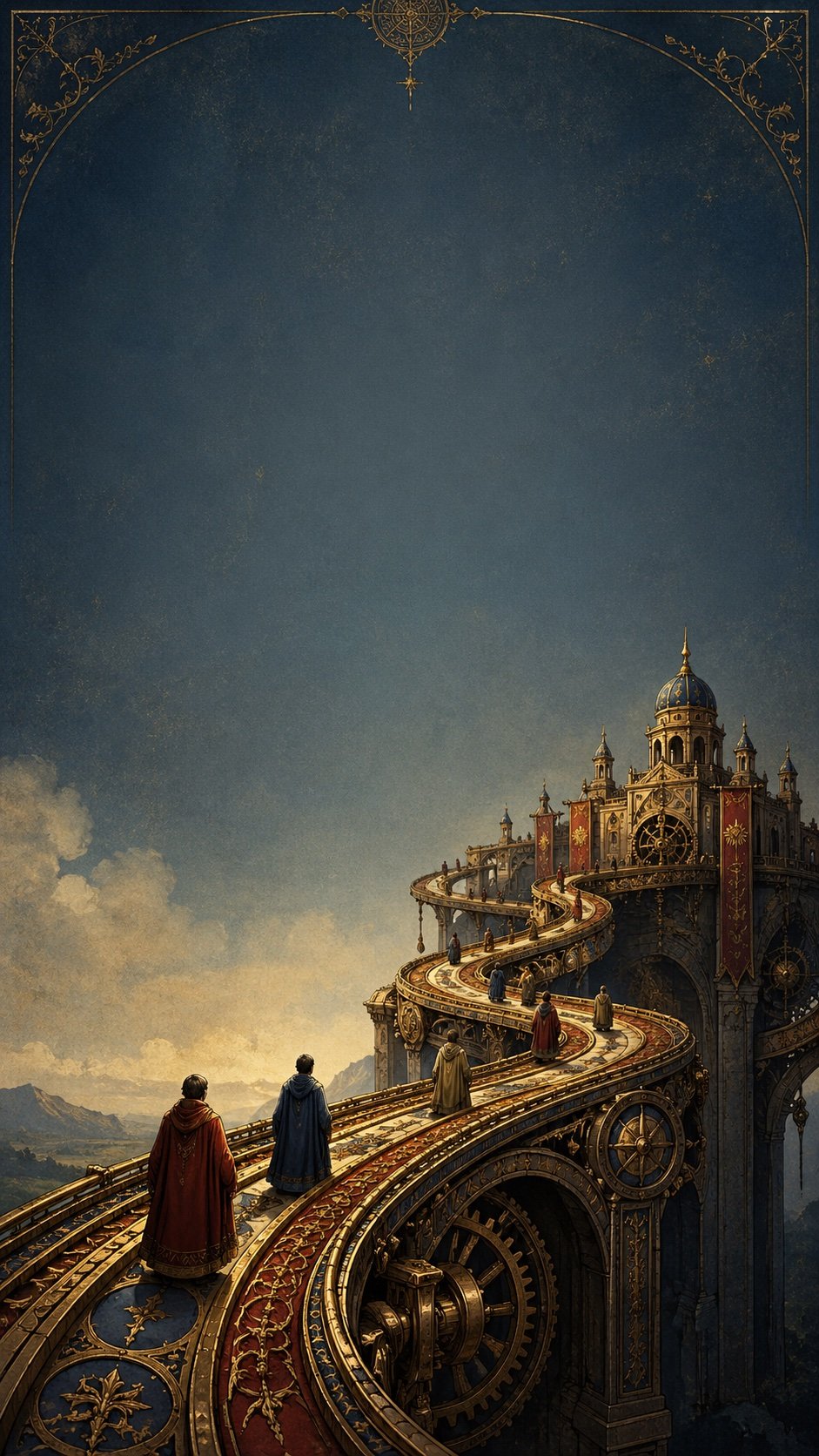
The Persian Royal Road ran about 2,700 km from Sardis in western Anatolia to Susa in today's Iran. Relays of mounted couriers, changing horses at 111 stations, could carry the king's messages its whole length in about nine days; on foot the journey took some ninety.
Ikigai Daily
The story behind the card
The road was organised and improved by Darius I, who ruled the Achaemenid Persian Empire from 522 to 486 BC. It linked Susa, one of the empire's capitals, with Sardis, the old capital of Lydia. Our main source is the 5th-century BC Greek historian Herodotus. He counted 111 staging posts and put the length at 450 parasangs; a parasang was a Persian measure of roughly an hour's walk, about 5 to 6 km. At each post a rested rider and horse stood ready, so a message passed on as in a relay race and never waited for a tired horse. Herodotus wrote that nothing in the world travelled faster than these couriers. A line adapted from his description, “Neither snow nor rain nor heat nor gloom of night stays these couriers from the swift completion of their appointed rounds”, is carved on New York's James A. Farley post office building.
Türkçe oku
Pers Kral Yolu, Batı Anadolu'daki Sardes'ten bugünkü İran'da bulunan Susa'ya kadar yaklaşık 2.700 km uzanıyordu. Yol boyunca 111 menzilde at değiştiren atlı ulaklar, kralın haberlerini yolun bir ucundan öbür ucuna yaklaşık dokuz günde ulaştırabiliyordu; aynı yolu yürüyerek gitmek doksan gün kadar sürerdi.
Yolu, MÖ 522–486 yılları arasında Ahameniş Pers İmparatorluğu'nu yöneten I. Darius düzenletip geliştirdi. Yol, imparatorluğun başkentlerinden Susa'yı eski Lidya başkenti Sardes'e bağlıyordu. Bu konudaki başlıca kaynağımız, MÖ 5. yüzyılda yaşamış Yunan tarihçi Herodot'tur. Herodot yol boyunca 111 menzil sayar ve yolun uzunluğunu 450 parasang olarak verir. Parasang, aşağı yukarı bir saatlik yürüyüşe, yani 5–6 km'ye karşılık gelen bir Pers uzunluk ölçüsüydü. Her menzilde dinlenmiş bir atlı ile atı hazır beklerdi; böylece haber bayrak yarışındaki gibi elden ele geçer, yorgun bir atı beklemek zorunda kalmazdı. Herodot, dünyada bu ulaklardan daha hızlı giden hiçbir şey olmadığını yazar. Onun anlatımından uyarlanan “Ne kar ne yağmur ne sıcak ne de gecenin karanlığı bu ulakları görevlerini hızla tamamlamaktan alıkoyar” sözü, New York'taki James A. Farley Postanesi binasına kazınmıştır.