

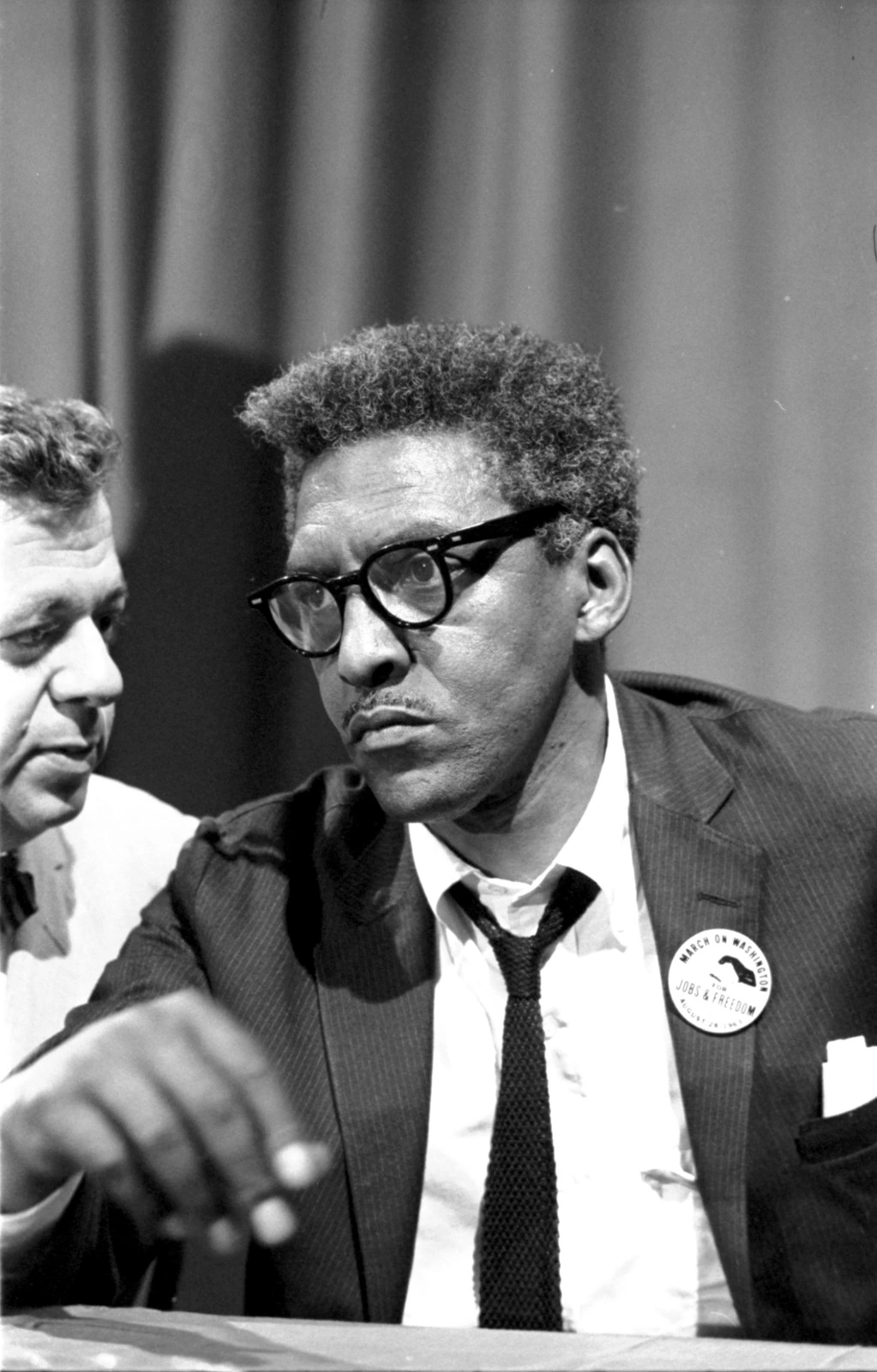
Bayard Rustin ran the day-to-day planning of the 1963 March on Washington, where Martin Luther King Jr. gave his 'I Have a Dream' speech. He led a team of 200 activists and organisers and arranged the buses, trains, marshals and sound. As a gay Black man in an openly homophobic era, he was repeatedly kept out of public view.
The veteran labour leader A. Philip Randolph brought Rustin in to organise the march in 1962. Roy Wilkins of the NAACP, wary of Rustin's past, would not let him take public credit, so Randolph became director and Rustin his deputy. Weeks before the march, Senator Strom Thurmond called Rustin a 'Communist, draft-dodger, and homosexual' and had the file on his 1953 arrest in Pasadena entered into the Congressional Record. That arrest had already forced Rustin out of the Fellowship of Reconciliation, the pacifist group he worked for. In 1947 he had organised the Journey of Reconciliation, the first Freedom Ride against segregation on interstate buses. In the 1980s, with his partner Walter Naegle, he spoke out for gay rights. He died in 1987; in 2013 Barack Obama awarded him the Presidential Medal of Freedom posthumously.