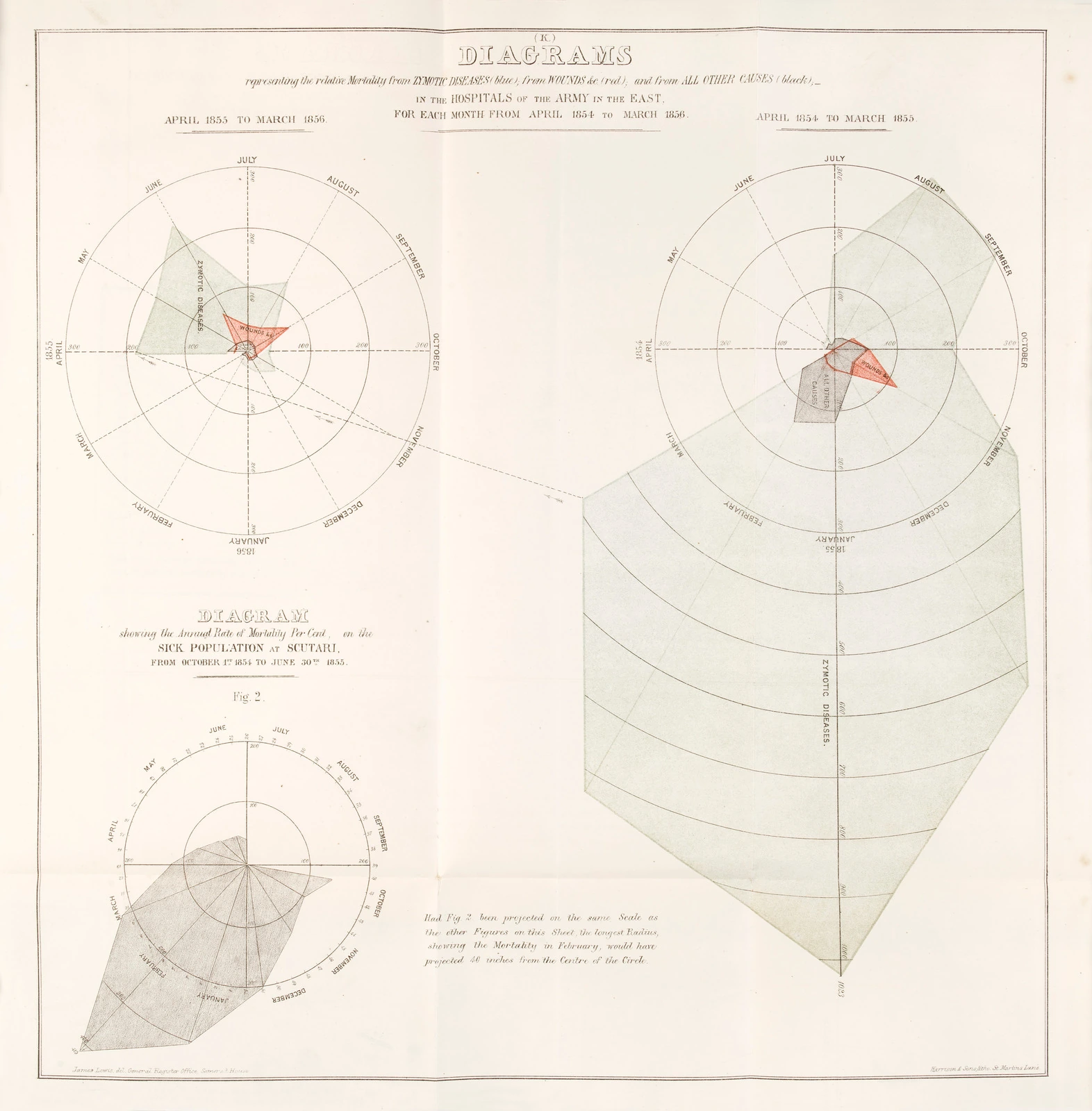
In 1858, Florence Nightingale published a circular mortality diagram from the Crimean War. Blue areas showed deaths from preventable disease, red from wounds and black from other causes. The blue overwhelmed the red: far more British soldiers were dying from disease than from battle wounds.
Florence Nightingale, Crimean War mortality statistics, 1858
The story behind the card
The diagram covered April 1854 to March 1856 month by month, and it showed deaths from disease falling sharply once sanitary conditions improved. Nightingale had led the nurses at the British army's hospital in Scutari, housed in the Selimiye Barracks in today's Üsküdar, Istanbul. She used this kind of chart, now often called a polar area or “rose” diagram, to make a point that plain tables could not: disease, not the enemy, was killing most of the soldiers. After the war she campaigned to reform army medicine and hygiene, and in 1858 she became the first female member of the Statistical Society of London, now the Royal Statistical Society.
Türkçe oku
Florence Nightingale 1858'de Kırım Savaşı'ndaki ölümleri gösteren dairesel bir grafik yayımladı. Mavi alanlar önlenebilir hastalıklardan, kırmızılar yaralardan, siyahlar başka nedenlerden ölenleri gösteriyordu. Mavi alanlar açık ara büyüktü: Britanyalı askerlerin çok daha fazlası yaralardan değil, hastalıklardan ölüyordu.
Grafik, Nisan 1854'ten Mart 1856'ya kadar her ayı ayrı gösteriyordu; hijyen koşulları düzeldikten sonra hastalıktan ölümlerin hızla düştüğü de görülüyordu. Nightingale savaş sırasında, İstanbul'da bugünkü Üsküdar'daki Selimiye Kışlası'nda kurulan İngiliz ordu hastanesinde hemşirelerin başındaydı. Düz tabloların anlatamadığını göstermek için bugün “Nightingale gülü” ya da kutupsal alan grafiği denen bu grafik türünü kullandı: Askerleri en çok öldüren düşman değil, hastalıktı. Savaştan sonra ordunun sağlık ve hijyen düzeninin yenilenmesi için mücadele etti; 1858'de de bugünkü Royal Statistical Society'nin öncülü Statistical Society of London'ın ilk kadın üyesi oldu.
Sources and further reading
Image details
An 1858 statistical plate comparing relative mortality rates from disease, wounds and other causes among British troops during the Crimean War, from April 1854 to March 1856.
Diagrams showing relative mortality, 1858. RAMC Muniment Collection in the care of the Wellcome Library / Wellcome Collection, via Wikimedia Commons. CC BY 4.0.
Resized.