
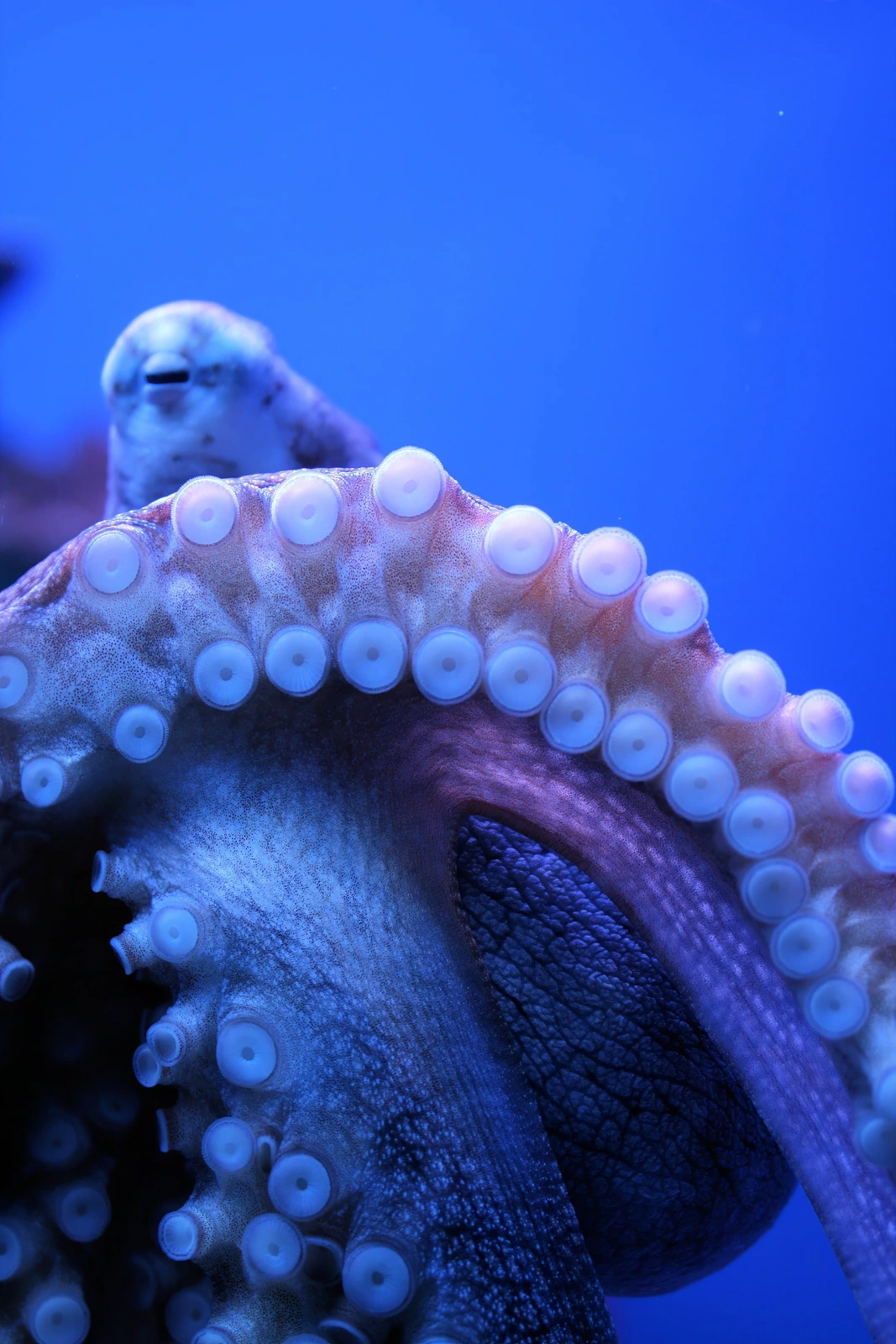
Octopus suckers can taste by touch. Special receptors in them detect chemicals on a surface, so an arm can tell food from rock the moment it makes contact, much as a tongue senses taste and touch at once.
Ikigai Daily
The story behind the card
In 2020 a team led by Nicholas Bellono at Harvard identified the molecules behind this “taste by touch”. They found a family of receptors that exists only in cephalopods, the group that includes octopuses, squid and cuttlefish. Called chemotactile receptors, they respond to chemicals on contact, especially substances that do not dissolve easily in water. Such chemicals stay on surfaces instead of drifting away, so they would be hard to smell from a distance. Some cells in each sucker specialise in touch and others in taste, and much of the information is handled in the arm's own nerve cord rather than the brain. In 2025 the same group reported that the receptors also pick up molecules made by bacteria living on surfaces. Signals from the microbes on prey and on eggs helped guide an octopus's hunting and the care of its eggs.
Türkçe oku
Ahtapotun vantuzları dokunarak tat alabilir. Vantuzlardaki özel algılayıcılar yüzeydeki kimyasalları yakalar; böylece kol, bir şeye değdiği anda onun yiyecek mi yoksa kaya mı olduğunu anlar. Bu, dilimizin tadı ve dokunuşu aynı anda algılamasına benzer.
Bu “dokunarak tatma”nın ardındaki molekülleri 2020'de Harvard'da Nicholas Bellono'nun yönettiği bir ekip buldu. Ekip, yalnızca kafadanbacaklılarda bulunan bir algılayıcı ailesi tanımladı; ahtapot, kalamar ve mürekkep balığı bu gruptandır. Kemotaktil reseptör denen bu algılayıcılar kimyasallara ancak temas edince tepki verir ve özellikle suda kolay çözünmeyen maddeleri tanır. Bu tür maddeler suya karışıp dağılmak yerine yüzeylerde kaldığı için uzaktan koku olarak alınmaları zordur. Vantuzdaki hücrelerin bir kısmı dokunmaya, bir kısmı tada uzmanlaşmıştır; bilginin büyük bölümü de beyinde değil, kolun kendi sinir kordonunda işlenir. Aynı ekip 2025'te, bu algılayıcıların yüzeylerde yaşayan bakterilerin ürettiği molekülleri de yakaladığını bildirdi. Avın ve yumurtaların üzerindeki mikroplardan gelen bu sinyaller, ahtapotun avlanmasına ve yumurtalarına bakmasına yön veriyordu.
Sources and further reading
Image details
Suckers of a day octopus at Maui Ocean Center, photographed in 2013.
ImagePerson, 2013, via Wikimedia Commons. CC BY-SA 4.0.
Digitally processed source photograph; specific edits are undocumented. Resized.