
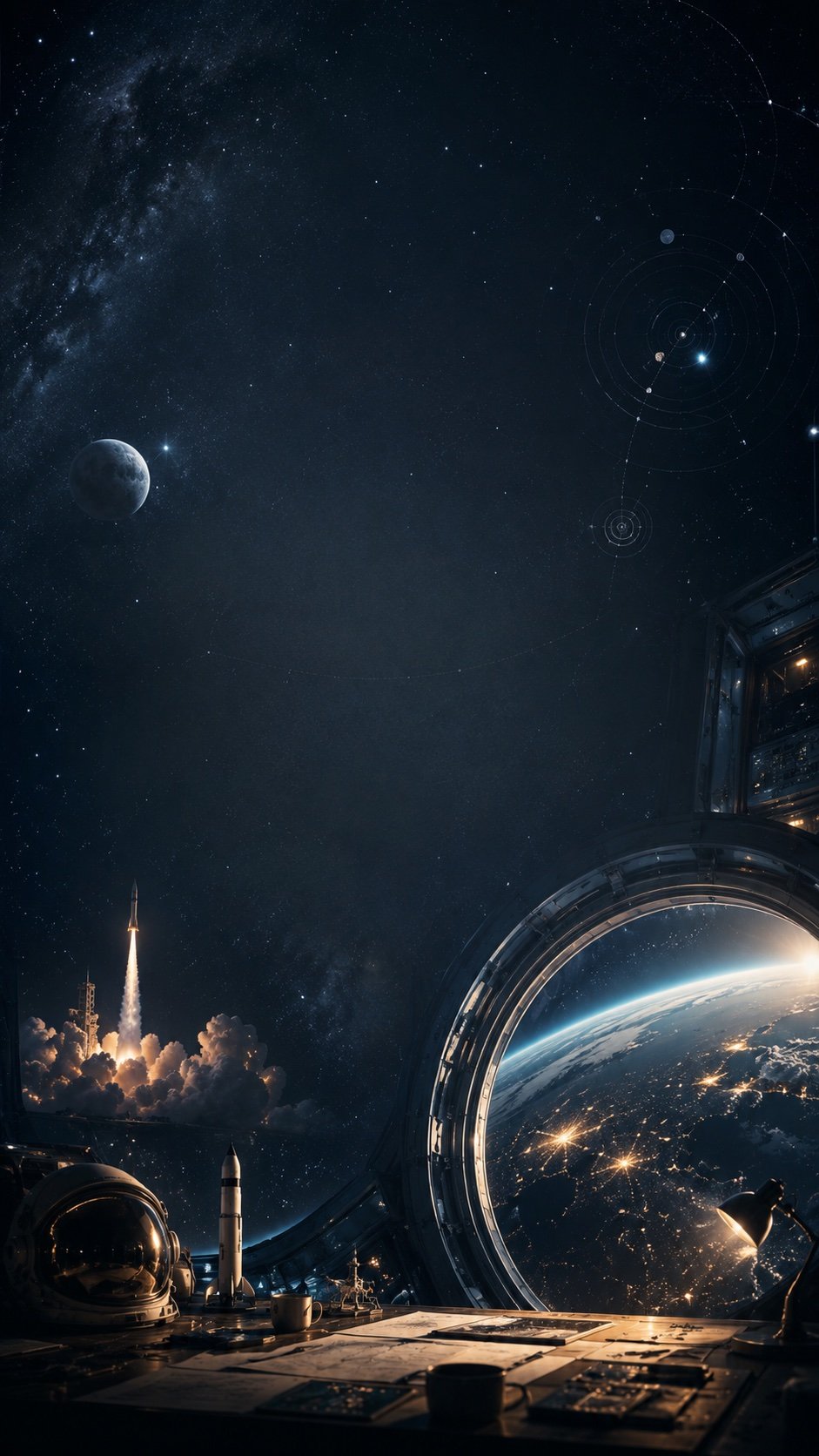
Sound needs a medium such as air, water or solid matter to travel, so empty space is silent to human ears.
Physics
The story behind the card
Sound is a wave of pressure: a vibrating object pushes on the particles next to it, which push on their neighbours. It travels at about 343 metres per second in air and more than four times faster in water. In 1660 the English scientist Robert Boyle showed that as air was pumped out of a glass jar, the sound of what was inside faded away. Space is not perfectly empty, but between the stars there is on average only about one atom in each cubic centimetre, far too little to carry sound we could hear. That is why astronauts on spacewalks talk by radio. Yet very thin gas can carry immense waves: in 2003 astronomers found pressure ripples in the gas around a black hole in the Perseus galaxy cluster, a note about 57 octaves below middle C.
Türkçe oku
Ses ancak hava, su ya da katı bir cisim gibi titreşebilecek bir ortamda yayılabilir. Bu yüzden boş uzay, insan kulağı için sessizdir.
Ses bir basınç dalgasıdır: Titreşen bir cisim yanındaki parçacıkları iter, onlar da komşularını. Havada saniyede yaklaşık 343 metre, suda bunun dört katından fazla hızla ilerler. İngiliz bilim insanı Robert Boyle 1660'ta, havası pompayla boşaltılan bir cam fanustaki sesin giderek kaybolduğunu gösterdi. Uzay tümüyle boş değildir, ama yıldızlar arasında her santimetreküpte ortalama bir atom kadar madde vardır; bu, duyabileceğimiz sesi taşımaya yetmez. Uzay yürüyüşüne çıkan astronotlar da bu yüzden telsizle konuşur. Yine de çok seyrek gaz dev dalgalar taşıyabilir: 2003'te gökbilimciler, Perseus gökada kümesindeki bir kara deliğin çevresindeki gazda basınç dalgaları buldu. Bu “nota”, piyanodaki orta do sesinden yaklaşık 57 oktav daha pestir.