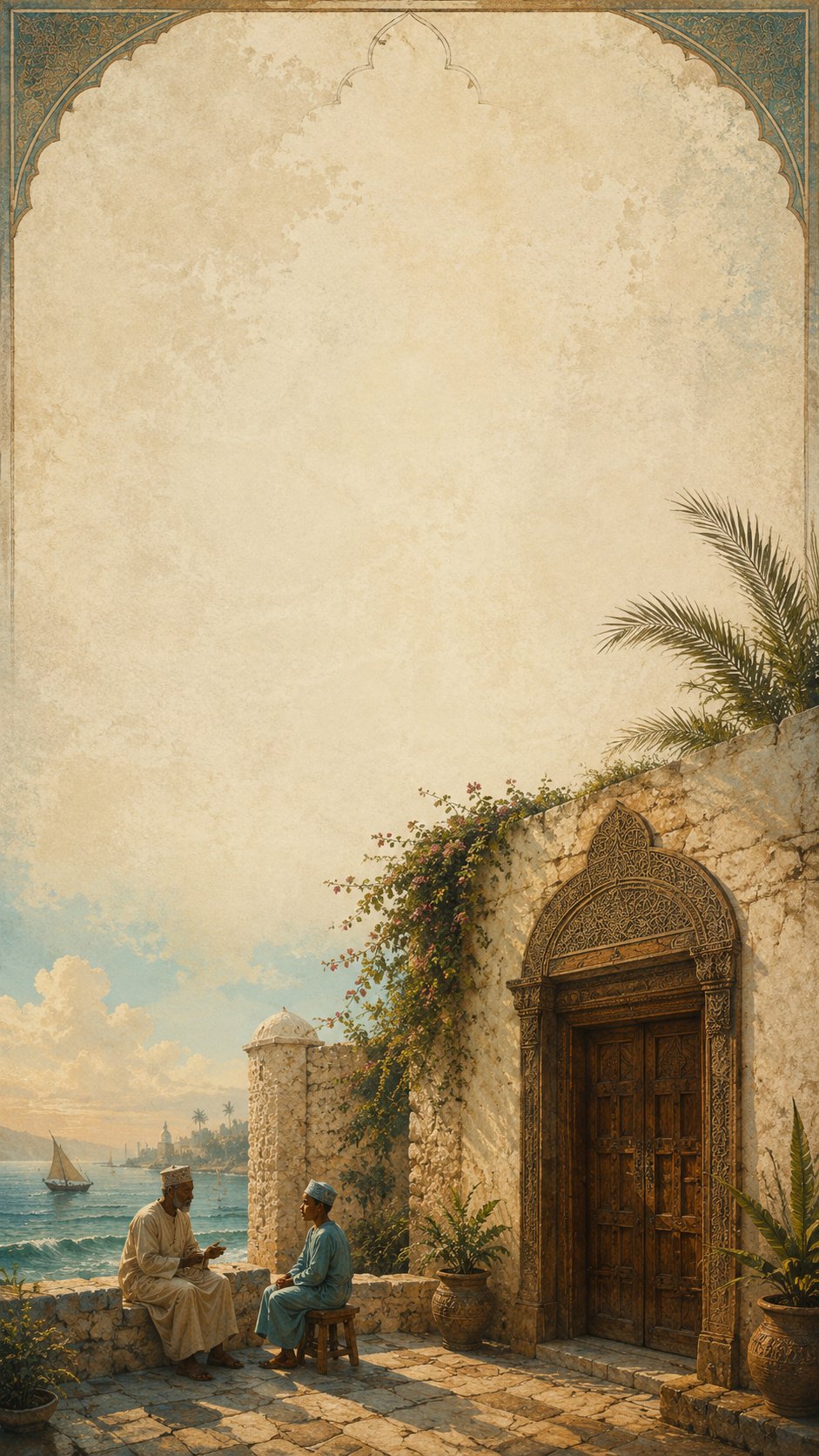
Kilwa Kisiwani, an island off the coast of Tanzania, was one of the richest Swahili trading cities from the 13th to the 15th century. It controlled the gold trade of the southern coast and built its mosques and palaces of coral stone.
Tanzanian coast, 13th–15th centuries
The story behind the card
The Swahili were Muslim African trading communities of the East African coast. Kilwa grew rich when its sultans took control of the gold trade at Sofala, in today's Mozambique, where gold from the Zimbabwe plateau reached the sea. Merchants brought cloth, glass beads and porcelain from Arabia, Persia, India and China. The Great Mosque, one of the oldest standing on the coast, and the vast Husuni Kubwa palace were built of coral stone. For some 500 years Kilwa minted its own coins, mostly copper, which have been found as far inland as Great Zimbabwe. A Portuguese fleet sacked the city in 1505 and its trade declined. UNESCO listed the ruins in 1981; they were on its danger list from 2004 until conservation work allowed their removal in 2014.
Türkçe oku
Tanzanya kıyısı açığındaki Kilwa Kisiwani adası, 13. yüzyıldan 15. yüzyıla kadar en zengin Svahili ticaret kentlerinden biriydi. Güney kıyısının altın ticaretini elinde tuttu, camilerini ve saraylarını mercan taşından yaptı.Tanzanya kıyısı, 13.–15. yüzyıl
Svahililer, Doğu Afrika kıyısında yaşayan Müslüman ve Afrikalı tüccar topluluklardı. Kilwa, sultanları bugünkü Mozambik'teki Sofala'nın altın ticaretini ele geçirince zenginleşti; Zimbabve platosunun altını denize orada ulaşıyordu. Tüccarlar Arabistan'dan, İran'dan, Hindistan'dan ve Çin'den kumaş, cam boncuk ve porselen getirirdi. Kıyıda ayakta kalan en eski camilerden biri olan Ulu Cami ile dev Husuni Kubwa sarayı mercan taşından yapıldı. Kilwa yaklaşık 500 yıl boyunca çoğu bakırdan kendi sikkelerini bastı; bu sikkeler iç bölgelerde, Büyük Zimbabve'ye kadar uzanan yerlerde bulundu. 1505'te bir Portekiz filosu kenti yağmaladı ve ticareti geriledi. UNESCO kalıntıları 1981'de Dünya Mirası listesine aldı; 2004'ten beri tehlike listesinde olan kalıntılar, koruma çalışmalarının ardından 2014'te bu listeden çıkarıldı.