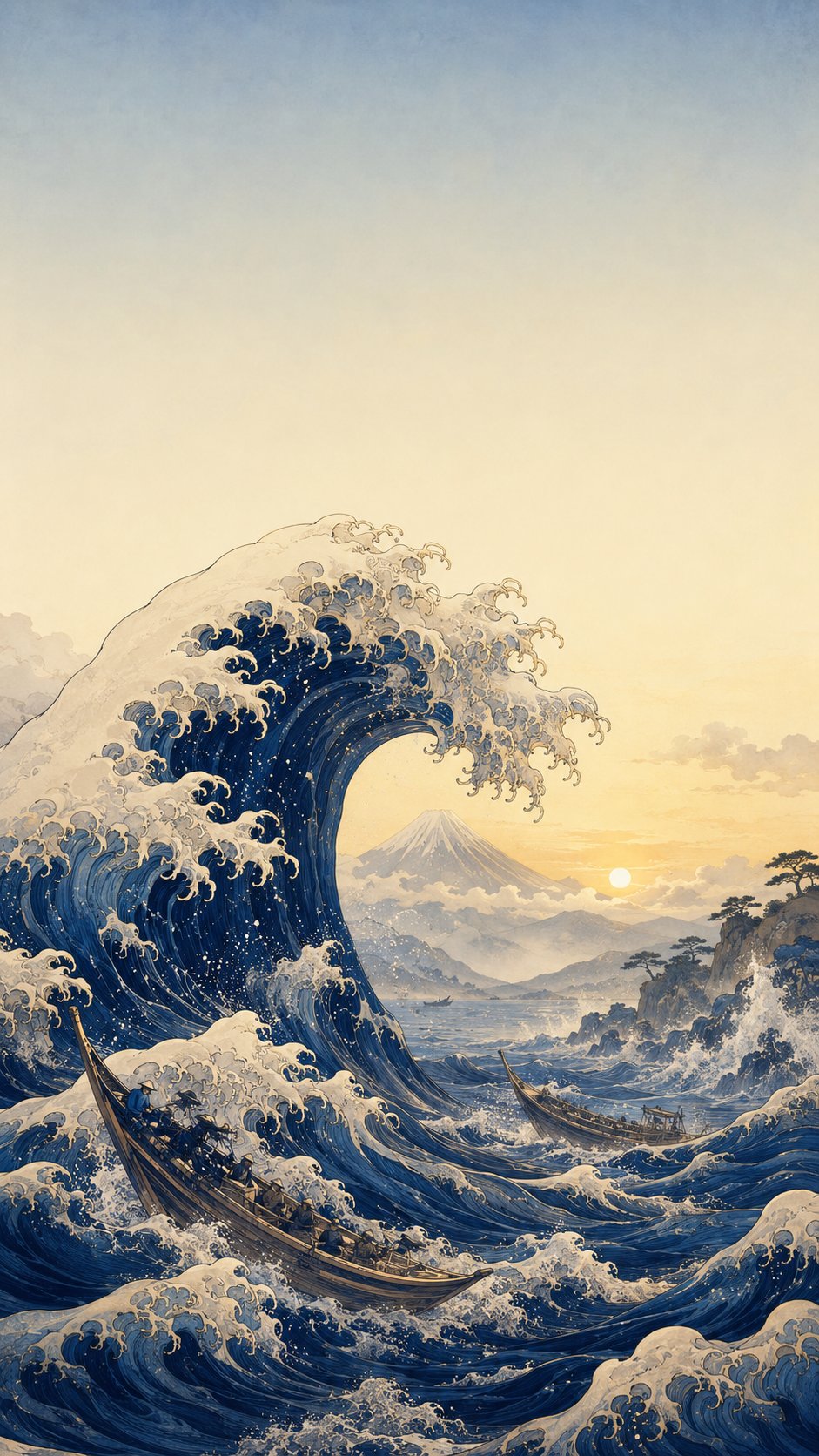
Ukiyo-e, the famous Japanese woodblock prints of the Edo period (1603–1868), were team work. A publisher planned and paid for each print, an artist such as Hokusai or Hiroshige drew the design, a carver cut a wooden block for each colour, and a printer laid the colours down one by one. The signature names only the designer.
Edo-period ukiyo-e workshops
The story behind the card
Ukiyo-e means 'pictures of the floating world', the teahouses, kabuki theatres and entertainment districts of Edo-period cities that many prints showed; later artists added landscapes. A single print could need ten or more blocks. Even Hokusai's Great Wave off Kanagawa, one of the most reproduced images in the world, was cut and printed by craftsmen whose names were not recorded. Carvers cut small guide marks called kento into each block, so that every colour landed exactly on the one before. Because Western art history tends to credit a single signature, this team work is easy to miss, yet it produced the prints that later influenced Van Gogh and Monet.
Türkçe oku
Edo döneminin (1603–1868) ünlü Japon ağaç baskıları, yani ukiyo-e'ler, bir ekibin işiydi. Yayıncı baskıyı planlayıp masrafını üstlenir, Hokusai ya da Hiroşige gibi bir ressam deseni çizer, oymacı her renk için ayrı bir tahta kalıp oyar, baskıcı da renkleri kâğıda tek tek basardı. Baskıdaki imza yalnızca deseni çizeni gösterir.
Ukiyo-e “yüzen dünyanın resimleri” demektir: baskıların çoğunda Edo dönemi şehirlerinin çayevleri, kabuki tiyatroları ve eğlence semtleri görülür; sonraki sanatçılar manzaraları da ekledi. Tek bir baskı için on ya da daha fazla kalıp gerekebiliyordu. Dünyanın en çok çoğaltılan görsellerinden Hokusai'nin Kanagawa Açıklarında Büyük Dalga'sı bile, adları kayda geçmemiş zanaatkârlar tarafından oyulup basıldı. Oymacılar her kalıba kento denen küçük hizalama işaretleri açardı; böylece her renk bir öncekinin tam üstüne otururdu. Batı sanat tarihi genellikle tek bir imzayı öne çıkardığı için bu ekip işi kolayca gözden kaçar; oysa sonradan Van Gogh'u ve Monet'yi etkileyen baskıları bu ekipler üretti.