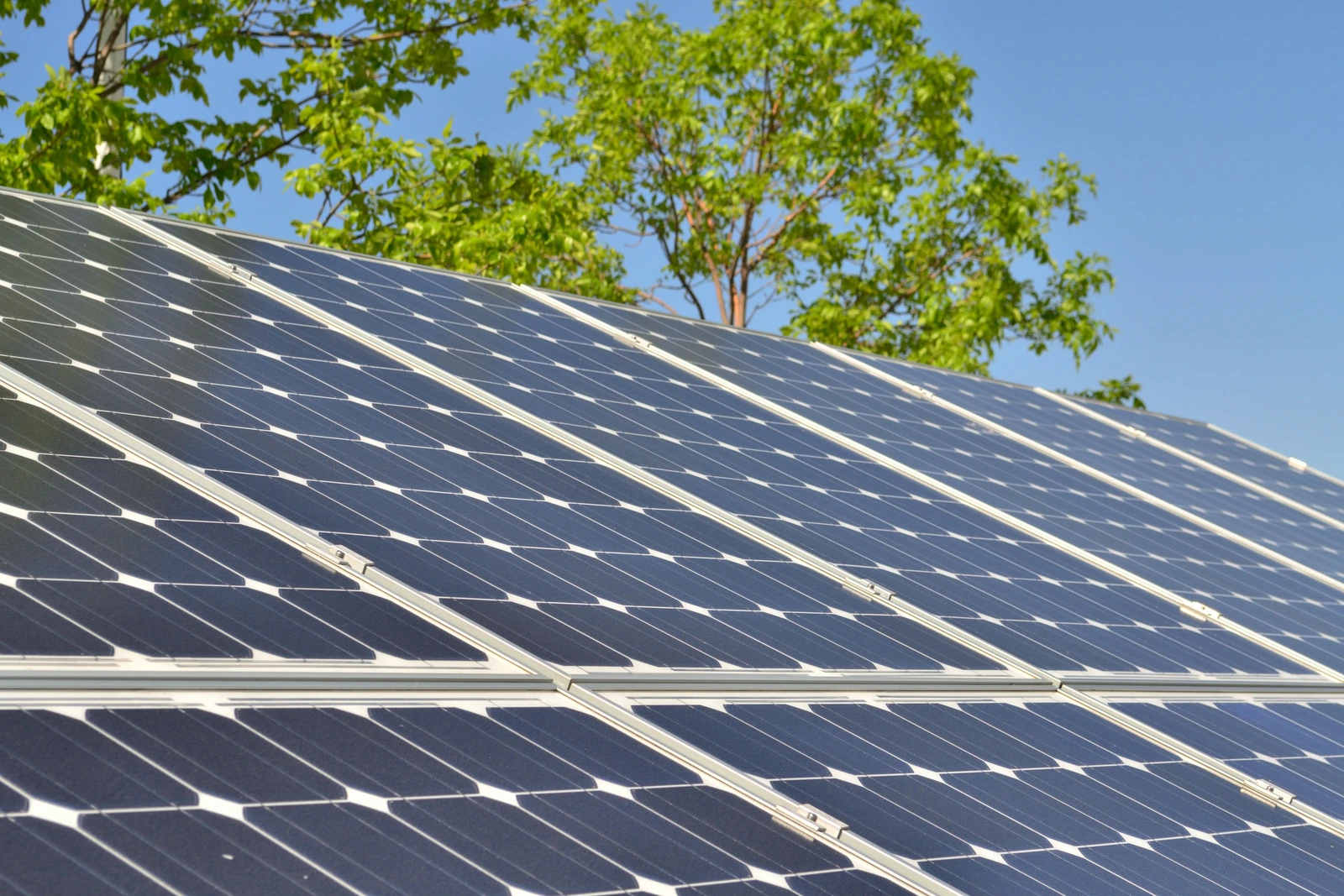
A solar cell turns sunlight straight into electric current. Most are thin slices of silicon, a semiconductor: a material that conducts electricity well only when its electrons gain extra energy. Sunlight supplies it, and an electric field between two layers of the cell drives the freed electrons out through a wire as current.
Photovoltaic physics
The story behind the card
The two layers are silicon with tiny amounts of other elements added: one has spare electrons, the other is short of them. Where they meet, a boundary called a p–n junction forms, and with it an electric field. This effect, called the photovoltaic effect, was first seen in 1839 by the French physicist Edmond Becquerel, who noticed a small current when light fell on metal plates in a liquid. It is related to, but not the same as, the photoelectric effect, in which light knocks electrons out of a metal surface. The first practical silicon solar cell was shown at Bell Labs in the United States in April 1954 and turned about 6 per cent of sunlight into electricity. Ordinary panels today convert around a fifth. One cell gives only about half a volt, so a panel links dozens of cells together.
Türkçe oku
Güneş pili, güneş ışığını doğrudan elektrik akımına çevirir. Çoğu, yarı iletken silisyumdan kesilmiş ince dilimlerdir; yarı iletkenler, elektronları ek enerji alınca elektriği iyi iletir. Bu enerjiyi ışık verir; pilin iki katmanı arasındaki elektrik alanı da serbest kalan elektronları bir kablodan akım olarak dışarı sürer.
Bu iki katman, içine çok az miktarda başka element katılmış silisyumdur: Birinde fazladan elektron, ötekinde elektron eksiği vardır. Birleştikleri yerde p-n eklemi denen bir sınır ve onunla birlikte bir elektrik alanı oluşur. Işıktan elektrik elde edilmesini sağlayan bu fotovoltaik etkiyi ilk kez 1839'da Fransız fizikçi Edmond Becquerel gözlemledi: Bir sıvının içindeki metal levhalara ışık düştüğünde küçük bir akım oluştuğunu fark etti. Bu olay, ışığın metal yüzeyden elektron kopardığı fotoelektrik etkiyle akrabadır ama aynı şey değildir. İlk kullanışlı silisyum güneş pili Nisan 1954'te ABD'deki Bell Laboratuvarları'nda tanıtıldı ve güneş ışığının yaklaşık %6'sını elektriğe çeviriyordu. Bugünkü sıradan paneller bu oranı beşte bire yaklaştırır. Tek bir pil ancak yarım volt kadar gerilim verdiği için paneller onlarca pilin birbirine bağlanmasıyla yapılır.
Sources and further reading
Image details
Photovoltaic cells assembled into solar panels, photographed in June 2011.
Photo: Raysonho @ Open Grid Scheduler / Grid Engine, 2011, via Wikimedia Commons. Licence: CC0 1.0.