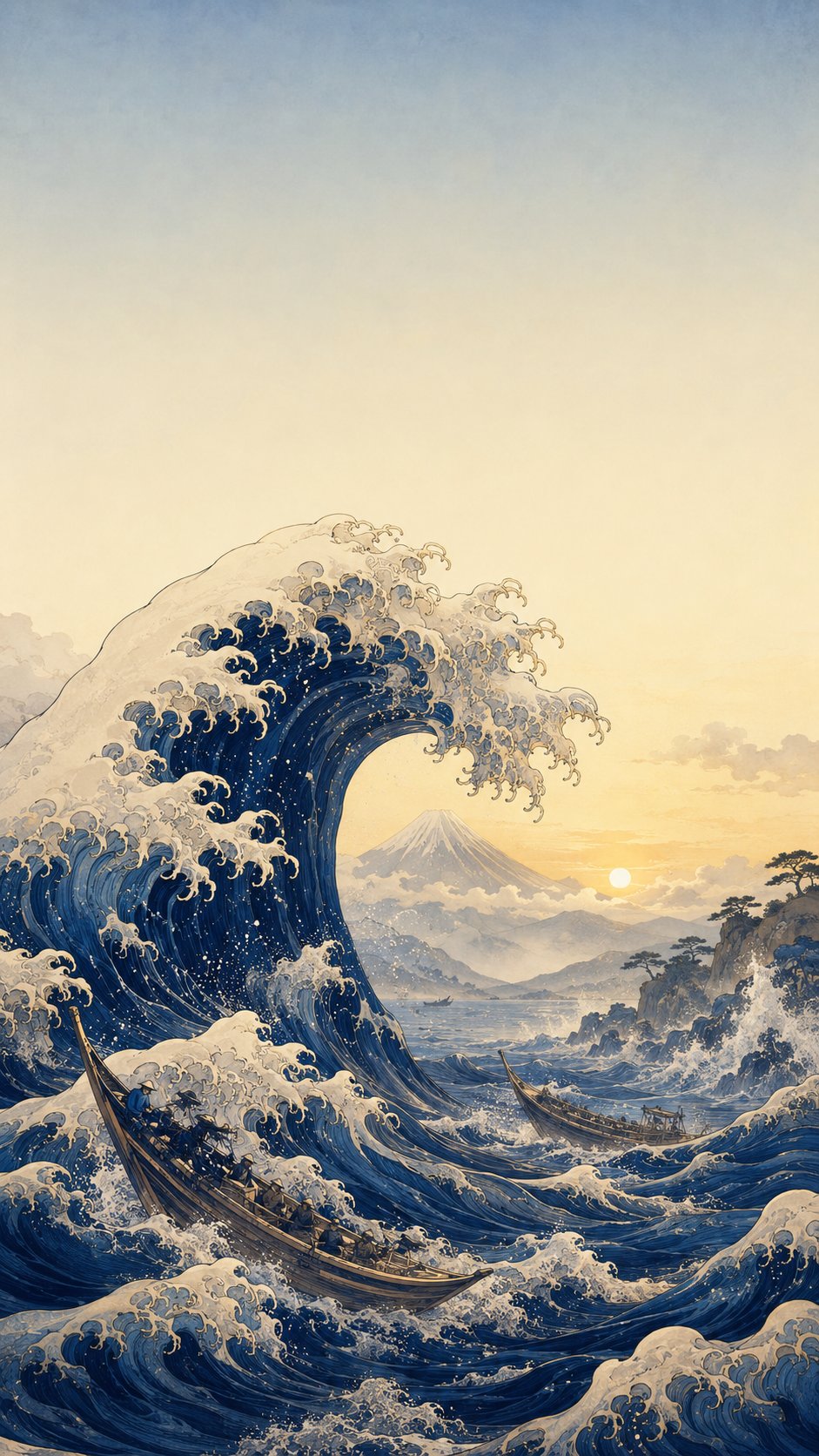
Katsushika Hokusai, the Japanese artist behind the famous print The Great Wave, wrote at about 75 that nothing he had made before the age of seventy was worth counting. By 110, he hoped, every dot and every line he drew would be alive.
One Hundred Views of Mount Fuji, 1834
The story behind the card
The lines come from the afterword to his picture book One Hundred Views of Mount Fuji, published in 1834, when he was 75 by the traditional Japanese count. He writes that he had loved drawing the shapes of things since the age of six, and that only at seventy-three had he begun to grasp the structure of animals, birds, insects and fish and how plants grow. He hoped to go further in his eighties and nineties and to reach something divine at a hundred. He signed it Gakyō Rōjin Manji, 'the old man mad about drawing'. The Great Wave, from around 1831, was already behind him. He kept working until his death in 1849, at 88.
Türkçe oku
Kanagava Açıklarında Büyük Dalga baskısıyla tanınan Japon sanatçı Katsushika Hokusai, 75 yaşlarındayken yetmişinden önce yaptığı hiçbir şeyin hesaba katılmaya değmediğini yazdı. Umudu, 110 yaşına geldiğinde çizdiği her noktanın, her çizginin canlı olmasıydı.Fuji Dağı'nın Yüz Görünümü, 1834
Bu sözler, 1834'te yayımlanan Fuji Dağı'nın Yüz Görünümü adlı resimli kitabının sonsözünde geçer; Hokusai o sırada geleneksel Japon yaş sayımına göre 75 yaşındaydı. Altı yaşından beri nesnelerin biçimlerini çizmeye tutkun olduğunu, hayvanların, kuşların, böceklerin, balıkların yapısını ve bitkilerin nasıl büyüdüğünü ancak yetmiş üçünde biraz kavramaya başladığını anlatır. Seksenlerinde ve doksanlarında daha da ilerlemeyi, yüz yaşında ise kutsal sayılacak bir ustalığa ulaşmayı umar. Yazıyı “çizime deli yaşlı adam” anlamına gelen Gakyō Rōjin Manji adıyla imzalamıştı. Büyük Dalga'yı yaklaşık 1831'de çoktan yapmıştı. 1849'da 88 yaşında ölene dek çalışmayı sürdürdü.