The story behind the card
Delta blues took shape among Black sharecroppers, tenant farmers who paid their rent with a share of the crop, and labourers in the Mississippi Delta. It drew on field hollers, the calls workers sang across the fields, on work songs and church singing, and on new guitar techniques such as sliding a bottleneck or knife blade along the strings. Charley Patton, often called the father of the Delta blues, and Son House played in juke joints, informal rural bars where Black workers gathered to drink, dance and hear music. Racial violence and the debts of sharecropping shaped the world the music came from. In the Great Migration many Delta musicians moved north; in Chicago Muddy Waters took up the electric guitar, and his electric blues fed directly into rock and roll.
Türkçe oku
Delta blues, 20. yüzyılın başlarında Mississippi Deltası'ndaki Afroamerikanlar arasında doğan, gitarla ve sesle yapılan blues'tur. İş şarkılarından, tarlada çalışanların birbirine seslendiği ezgilerden ve hikâye anlatma geleneğinden beslendi; sonraki blues'u, rock'ı ve popüler müziğin büyük bölümünü biçimlendirdi.
Delta blues, Mississippi Deltası'nda ortakçı olarak, yani tarlanın kirasını ürünün bir kısmıyla ödeyerek çalışan siyahi çiftçiler ve tarım işçileri arasında şekillendi. İşçilerin tarlada birbirine seslendiği ezgilerden, iş şarkılarından, kilise ilahilerinden ve tellerin üzerinde bir şişe boynu ya da bıçak kaydırılarak çalınan yeni gitar tekniklerinden beslendi. Delta blues'un babası sayılan Charley Patton ile Son House, siyahi işçilerin içki içmek, dans etmek ve müzik dinlemek için toplandığı, “juke joint” denen kırsal meyhanelerde çalardı. Irkçı şiddet ve ortakçılığın getirdiği borç, bu müziğin doğduğu dünyayı biçimlendirdi. Büyük Göç'le pek çok Delta müzisyeni kuzeye taşındı; Chicago'da elektro gitara geçen Muddy Waters'ın elektrikli blues'u doğrudan rock and roll'u besledi.
Sources and further reading
Image details
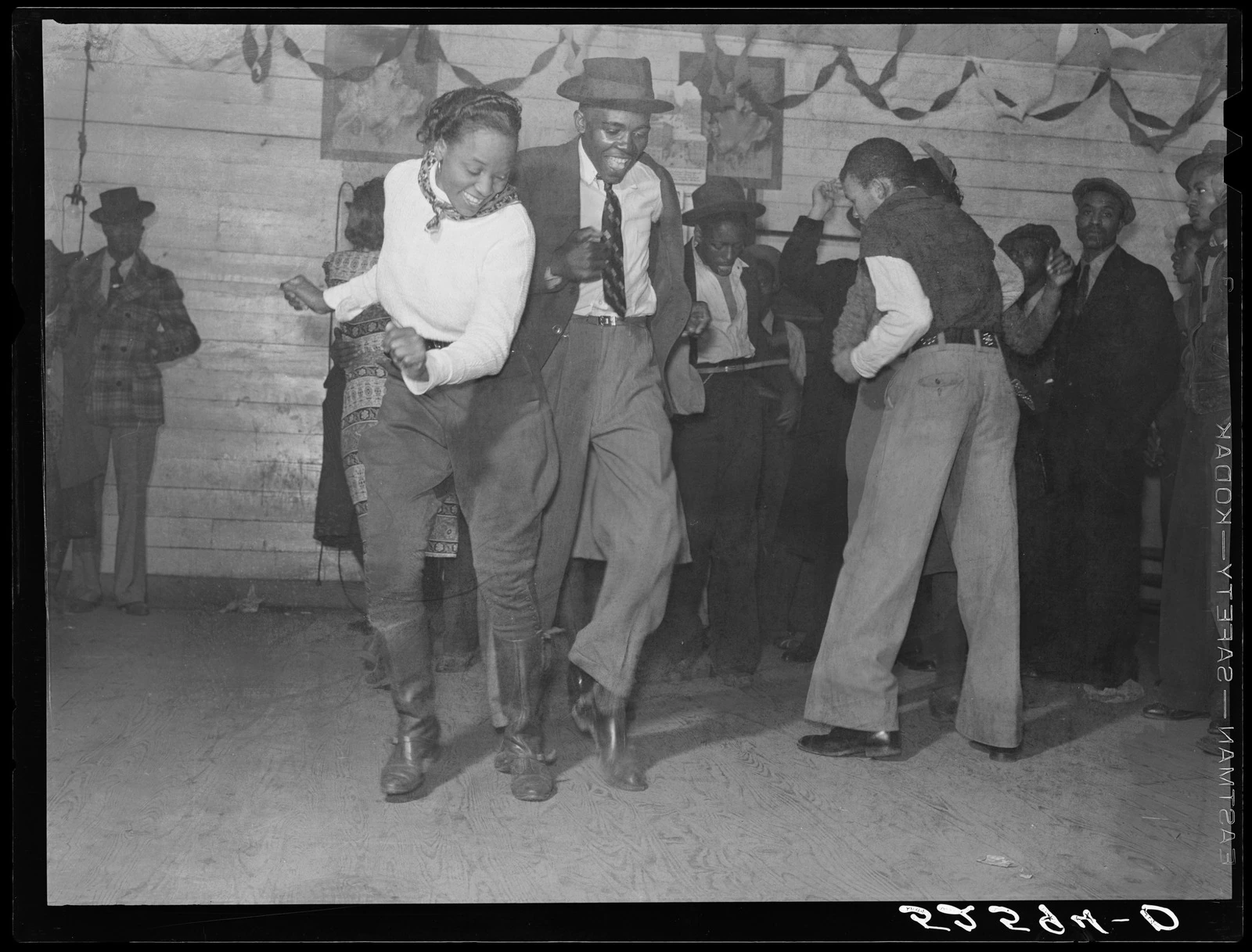
Juke-joint dancers near Clarksdale in the Mississippi Delta, November 1939.
Marion Post Wolcott, November 1939. FSA/OWI Collection, Library of Congress (LC-USF34-052594-D), via Wikimedia Commons. Public domain.