In 1854, at New York's Crystal Palace, Elisha Otis proved that a lift could be safe: standing on a raised platform, he had the rope holding it cut. The platform dropped only a short way before his safety catch locked it in place, showing that passengers need not fall if a rope failed.
Elisha Otis, 1854 public demonstration, New York Crystal Palace
The story behind the card
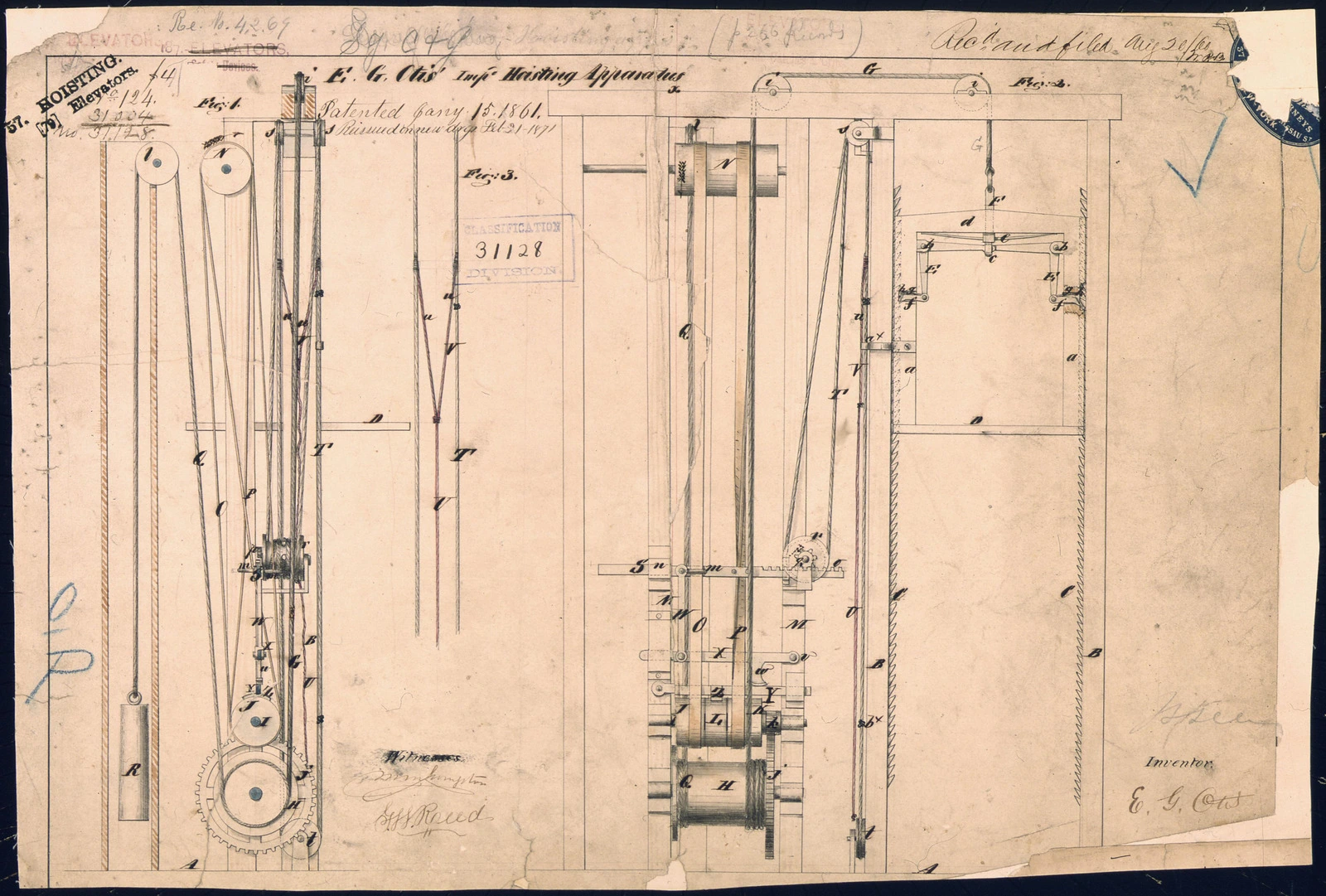
Before Otis, hoists were used mainly for goods, because a snapped rope meant a deadly fall. Otis, a mechanic at a bedstead factory in Yonkers, New York, devised his safety device in 1853 to lift heavy machinery there. A steel wagon spring sat above the platform; if the rope went slack, the spring snapped outward and pushed catches into toothed bars along the guide rails. The Crystal Palace show turned doubters into customers, and in 1857 Otis installed the first passenger safety lift, in a five-storey shop on Broadway in New York. The company he founded is still one of the world's largest lift makers.
Türkçe oku
Elisha Otis, 1854'te New York'taki Crystal Palace'ta asansörün güvenli olabileceğini kanıtladı: yüksekteki bir platformun üzerinde dururken onu taşıyan halatı kestirdi. Platform yalnızca kısa bir mesafe düştü, ardından geliştirdiği emniyet kilidi onu olduğu yerde tuttu. Halat kopsa bile yolcuların düşmesi gerekmiyordu.
Otis'ten önce asansörler çoğunlukla yük taşımak için kullanılırdı, çünkü halat koparsa düşüş ölümcül olurdu. New York'un Yonkers kentindeki bir karyola fabrikasında makinist olarak çalışan Otis, emniyet düzeneğini 1853'te oradaki ağır makineleri yukarı taşımak için tasarladı. Platformun üstünde çelik bir araba yayı vardı; halat gevşeyince yay açılıyor ve kilit dillerini raylar boyunca uzanan dişli çubuklara geçiriyordu. Crystal Palace'taki gösteri kuşkucuları müşteriye çevirdi; Otis 1857'de ilk emniyetli yolcu asansörünü New York'ta, Broadway'deki beş katlı bir mağazaya kurdu. Kurduğu şirket bugün de dünyanın en büyük asansör üreticilerinden biridir.
Sources and further reading
Image details
Elisha Otis's elevator-safety patent drawing, 15 January 1861. The toothed-rail catches show the principle he had demonstrated publicly in 1854.
Elevator patent drawing associated with Elisha Otis, 1861. U.S. National Archives (NAID 305889), via Wikimedia Commons. Public domain.