Lives worth reading about

Biography

Stories of scientists, artists, campaigners and other people, including the complexities behind their achievements.

Subject collectionPage 4Context and sources

Related subjects

Browse this subject and connected topics.

Keep reading below, or choose a related topic to explore something different.

DriveReading mode
StillnessReading mode
WonderReading mode
DriveHistory

Momofuku Ando invented instant noodles at 48, after losing nearly everything when a credit union he chaired collapsed in 1957. After months of experiments in a shed behind his house near Osaka, he launched Chicken Ramen in 1958; Cup Noodles followed in 1971, when he was 61.

By Ando's own account, the idea came from watching tempura being fried: flash-frying cooked, seasoned noodles in hot oil drove out the moisture and left tiny holes, so boiling water could soften them again in minutes. Chicken Ramen went on sale on 25 August 1958. Cup Noodles, sold in a waterproof polystyrene cup, followed in 1971 and helped take instant noodles around the world. In a 2000 Japanese poll, instant noodles were voted the country's greatest invention of the twentieth century. The early part of the story comes mainly from Ando and his company, Nissin.

DriveHealth

Japanese skier and climber Yuichiro Miura reached the summit of Everest three times after turning 70: in 2003, in 2008 at 75, and on 23 May 2013, aged 80 years and 223 days. That last climb, after four operations for an irregular heartbeat, made him the oldest person on record to stand on top.

Miura first became famous in 1970, when he skied nearly 2,000 vertical metres down Everest from the South Col, the high saddle below the summit, using a parachute to slow himself. He fell for about 400 metres and stopped not far from a deep crevasse. A film of the descent, The Man Who Skied Down Everest, won the Academy Award for Best Documentary Feature, the first sports film to do so. From 2008 onwards he had four operations for arrhythmia, an irregular heartbeat. After reaching the top at 80 he could not finish the descent on foot and was flown off the mountain by helicopter from about 6,500 metres, which Guinness rules allow for a summit record.

DriveHealth

Fauja Singh took up running in his eighties, after losing his wife and then a son. He ran his first marathon in London in 2000, at 89, and on 16 October 2011 finished the Toronto Waterfront Marathon in 8 hours 11 minutes, aged 100 by the birth date in his British passport.

Singh was a farmer from Punjab, in northern India; by family accounts he could not walk until he was five. He moved to England in the 1990s and lived with one of his sons in Ilford, east London. Guinness World Records never listed his Toronto run, because he had no birth certificate and a passport alone could not prove his age. He completed about nine marathons in all, and his last race was a 10-kilometre run in Hong Kong in 2013. He died in July 2025, aged 114 by his passport, after being struck by a vehicle in his home village of Beas Pind.

DriveHistory

In 1967 Kathrine Switzer became the first woman to run the Boston Marathon with an official race number, having entered as 'K.V. Switzer'. A few miles in, official Jock Semple grabbed her and tried to tear off her bib, 261; her boyfriend shoved him aside, and she finished.

Boston did not accept women entrants in 1967; Bobbi Gibb had run the year before without a number, slipping in from the bushes near the start. Photographs of Semple lunging at Switzer went round the world. Her boyfriend, Tom Miller, was a hammer thrower. Afterwards the Amateur Athletic Union barred women from all races with men, until Boston officially admitted women in 1972. Switzer finished third that year, and Semple presented her trophy; the two later became friends. In 2017, fifty years after her first run, she ran Boston again at 70 wearing 261, and the organisers retired the number in her honour.

DriveHistory

Barbara Hillary, a retired New York nurse who had survived cancer twice, skied the final stretch to the North Pole in 2007 at 75, and reached the South Pole in 2011 at 79, the first African-American woman on record to stand at both.

Hillary spent 55 years as a nurse before turning to exploration. In her twenties she survived breast cancer, and around 1998 she was treated for lung cancer with surgery that left her breathing capacity reduced by about a quarter. She learned to cross-country ski specifically for the Arctic trip and raised more than $25,000 to fund it. After reaching both poles, she became a public speaker on climate change and ageing. She died in 2019, and in 2020 she was inducted into the National Women's Hall of Fame.

DriveScience

Ynés Mexía, a Mexican-American botanist, took her first botany course in her fifties and began collecting expeditions soon afterwards. In about thirteen years of fieldwork she gathered some 145,000 plant specimens, around 500 of them species new to science.

Mexía came to botany by an unlikely route. In 1909, aged 39, she suffered a mental and physical breakdown and moved to California for treatment; hikes with the Sierra Club helped her recover and drew her to nature, and in her early fifties she enrolled at the University of California, Berkeley. On her first expedition, to Mexico in 1925, she fell from a cliff and broke ribs, yet came back with 500 specimens. In 1928 she collected more than 6,000 in what is now Denali National Park in Alaska, and a two-and-a-half-year South American journey, including some 4,800 kilometres by canoe on the Amazon, yielded about 65,000. She died of lung cancer in 1938, aged 68. A genus, Mexianthus, and about fifty species carry her name.

DriveHealth

In 1952 the American anaesthetist Virginia Apgar devised the Apgar score, a quick way to rate a newborn's condition right after birth. Given at one and five minutes by checking colour, heart rate, reflexes, muscle tone and breathing, it became standard in delivery rooms worldwide.

Apgar trained as a surgeon at Columbia University in the 1930s, one of very few women to do so, but the head of surgery, Allen Whipple, steered her towards anaesthesia, then a young specialty. Working at births, she saw that no one systematically checked a newborn's condition. Her score rates each of five signs 0, 1 or 2, for a total of 0 to 10; most healthy babies score 7 or more, while a low score tells staff that a baby needs help at once. In 1962 colleagues turned her name into a memory aid: Appearance, Pulse, Grimace, Activity, Respiration.

DriveHealth

In 1960, in her first month at the US Food and Drug Administration, Frances Oldham Kelsey was asked to approve the sedative thalidomide. She found the safety data thin and held out for more than a year despite company pressure. The drug, soon linked to severe birth defects, was never sold in the US as a sedative.

Kelsey was a Canadian-born pharmacologist and doctor; in 1938 she earned the University of Chicago's first PhD in pharmacology. At the FDA she was one of only seven full-time physicians reviewing new drugs. The maker, Richardson-Merrell, pressed her repeatedly, but she kept asking for more evidence. By late 1961 doctors in Germany and Australia had linked thalidomide to severe birth defects, and in March 1962 the company withdrew its application. Even so, experimental tablets had already been given to thousands of American patients. In August 1962 President Kennedy gave Kelsey the President's Award for Distinguished Federal Civilian Service, only the second woman to receive it, and that October Congress passed the Kefauver-Harris Amendment, tightening US drug law. Decades later, in 1998, the FDA approved thalidomide under strict controls to treat a painful complication of leprosy.

DriveMind

Brazilian psychiatrist Nise da Silveira refused to treat her patients in Rio de Janeiro with lobotomy or electroshock. From 1946 she gave them studios for painting and modelling instead, and their work became the core of the Museum of Images of the Unconscious, founded in 1952.

Da Silveira qualified in medicine in Bahia in 1926, the only woman among 157 graduates. At a public psychiatric hospital in Rio she ran the occupational therapy section, where patients were treated through practical and creative activities. She saw painting not as a pastime but as a way to understand patients who could not easily put their experiences into words. In 1956 she opened Casa das Palmeiras, an outpatient centre where former patients could keep making art as they adjusted to life outside hospital. She corresponded with Carl Jung and led Rio's C. G. Jung Study Group until 1968. In 2022 Brazil entered her name in its official Book of Heroes and Heroines of the Homeland.

DriveLiterature

Portuguese writer José Saramago published his first novel in 1947, at 24, and his next only thirty years later. His breakthrough, Memorial do Convento (Baltasar and Blimunda in English), came out in 1982, the year he turned 60, and in 1998 he won the Nobel Prize in Literature.

In those years Saramago earned his living as a car mechanic, a civil servant in the social welfare service, an editor and translator at a publishing house, and a journalist, while publishing poetry and essays. A novel he wrote in the 1950s, Claraboia, stayed unpublished until after his death, in 2011. He returned to fiction with Manual of Painting and Calligraphy in 1977 and found his mature style: long, flowing sentences with dialogue run into the text without quotation marks. Memorial do Convento, set in eighteenth-century Portugal while the vast convent at Mafra was being built, follows a one-handed soldier, a young woman who can see inside people and a priest who dreams of flying. He was the first Portuguese-language writer to win the Nobel.

DriveHistory

Ernest Shackleton's ship Endurance was crushed by sea ice and sank in Antarctica's Weddell Sea in 1915. After months camped on drifting ice and an 800-mile open-boat voyage to fetch help, all 28 men survived. The wreck was found in 2022, almost intact.

After Endurance was trapped and crushed by the Weddell Sea ice, the crew camped on drifting floes before taking three lifeboats to Elephant Island, a bare island off the Antarctic Peninsula. Shackleton and five companions then sailed the lifeboat James Caird about 1,300 kilometres (800 miles) to South Georgia. With two of them, Frank Worsley and Tom Crean, he crossed the island's mountains on foot to reach a whaling station, then organised the rescue of the men left behind. The 22 men on Elephant Island were picked up on 30 August 1916. In March 2022 the Endurance22 expedition found the wreck 3,008 metres down on the floor of the Weddell Sea, remarkably well preserved.

DriveTechnology

During Malawi's 2001–02 famine, 14-year-old William Kamkwamba had to drop out of school. Using diagrams from a library book called 'Using Energy', he built a windmill from a bicycle frame, blue-gum poles and scrapyard parts, and lit his family's house.

He left school because his family could no longer pay the fees. His first machine powered a few light bulbs and a radio in the family's house, and neighbours queued to charge their mobile phones. He later built a solar-powered pump that brought his village its first supply of drinking water. His story spread after a talk at TEDGlobal 2007 in Arusha, Tanzania. With the journalist Bryan Mealer he wrote the memoir The Boy Who Harnessed the Wind (2009), and in 2019 Chiwetel Ejiofor wrote and directed a film of the same name, also playing William's father. Kamkwamba went on to Dartmouth College in the United States, graduating in environmental studies in 2014.

DriveHistory

Alice Coachman grew up in segregated Georgia, shut out of whites-only sports grounds, and trained barefoot on dirt roads, jumping over homemade bars of rope and sticks. At the 1948 London Olympics she won the high jump, the first Black woman to win an Olympic gold medal.

Her winning jump of 1.68 metres, cleared at the first attempt, set an Olympic record. Britain's Dorothy Tyler matched the height but needed two tries, so the gold went to Coachman, and King George VI presented her medal. She was the only American woman to win an athletics gold at those Games. Her best years had fallen in wartime, when the 1940 and 1944 Olympics were cancelled, yet she won the national high jump title of the Amateur Athletic Union ten years running, from 1939 to 1948. In 1952 Coca-Cola signed her as a spokesperson, making her the first African-American woman to endorse an international product.

WonderHistory

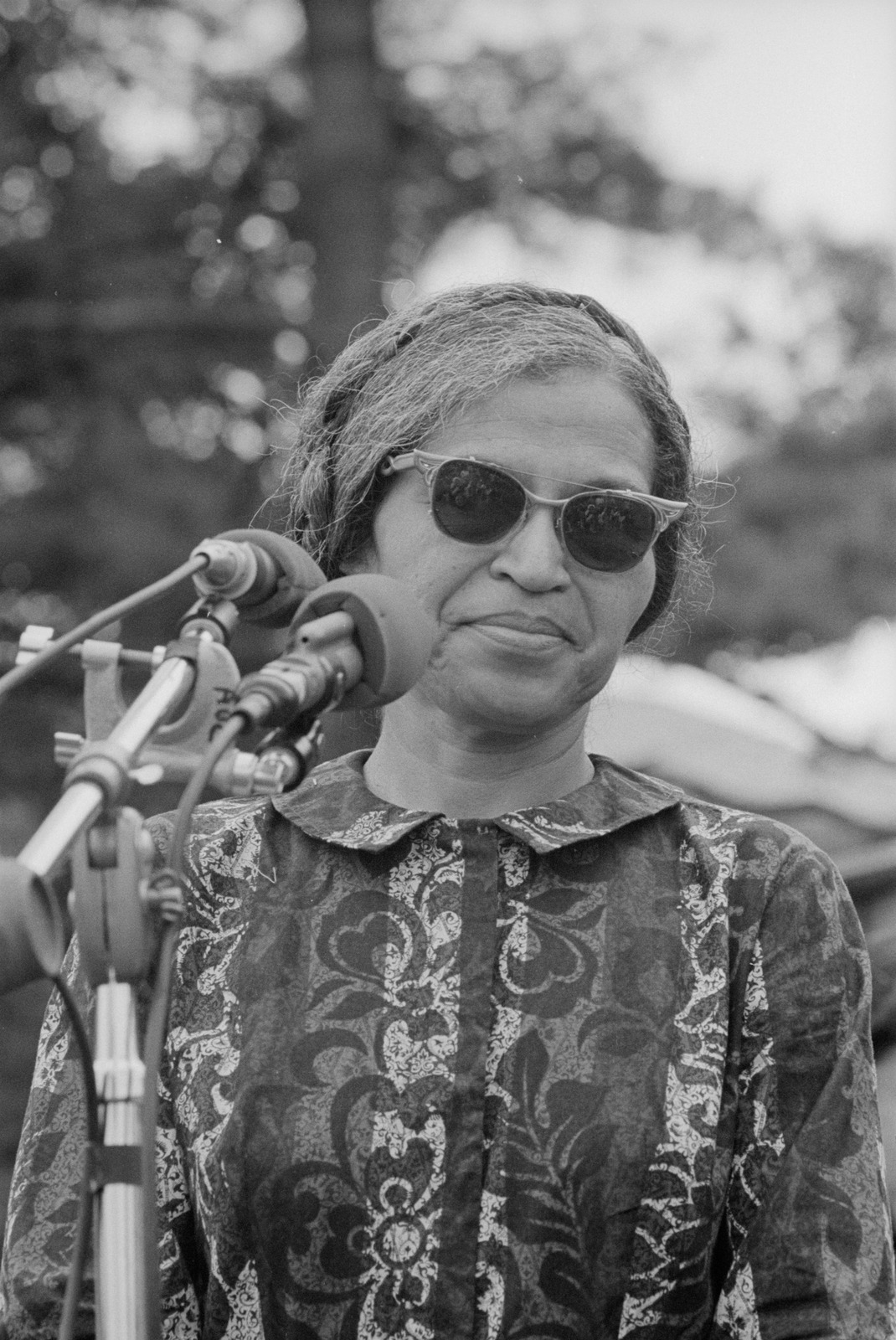
When Rosa Parks refused to give up her bus seat in Montgomery, Alabama, in 1955, she had spent twelve years in the NAACP, America's leading civil-rights group. She had investigated racial violence, worked on voter registration and attended a desegregation workshop. Her refusal came from an experienced organiser who knew the risks.

Parks joined the Montgomery branch of the NAACP in December 1943 and became its secretary. In 1944 she investigated the case of Recy Taylor, a Black woman assaulted by a group of white men, and she later advised the branch's Youth Council. In the summer of 1955 she attended a workshop on desegregation at Highlander Folk School in Tennessee, a training centre for activists. Her arrest that December helped start the 381-day Montgomery Bus Boycott, which ended after the Supreme Court's Browder v. Gayle ruling against bus segregation. She lost her department-store job, moved to Detroit in 1957 and worked for Congressman John Conyers from 1965 to 1988. In 2005 she became the first woman to lie in honour in the U.S. Capitol.

WonderHistory

On 29 August 1867, Karl Heinrich Ulrichs stood before about 500 German jurists in Munich and called for the laws against sex between men to be abolished. His motion had been kept off the agenda; he spoke anyway and was shouted down. Since 1864 he had published pamphlets arguing that such love is inborn and should not be punished.

Ulrichs was a trained lawyer. In 1854 an inquiry into rumours about his private life led him to resign from the civil service of the Kingdom of Hanover, and in 1859 a court barred him from practising law. He coined 'Urning' for a man who loves men, after Aphrodite Urania, the 'heavenly' Aphrodite of Plato's Symposium. Police in Saxony and Prussia had already seized and banned his pamphlets. In 1871 Paragraph 175 of the new German Empire's penal code made sex between men a crime nationwide. Ulrichs moved to Italy in 1880, settled in L'Aquila and published a journal in Latin until his death in 1895. He is often described as the first gay man to speak out publicly for gay rights, and streets in Munich, Berlin, Bremen and Hanover bear his name.

WonderHistory

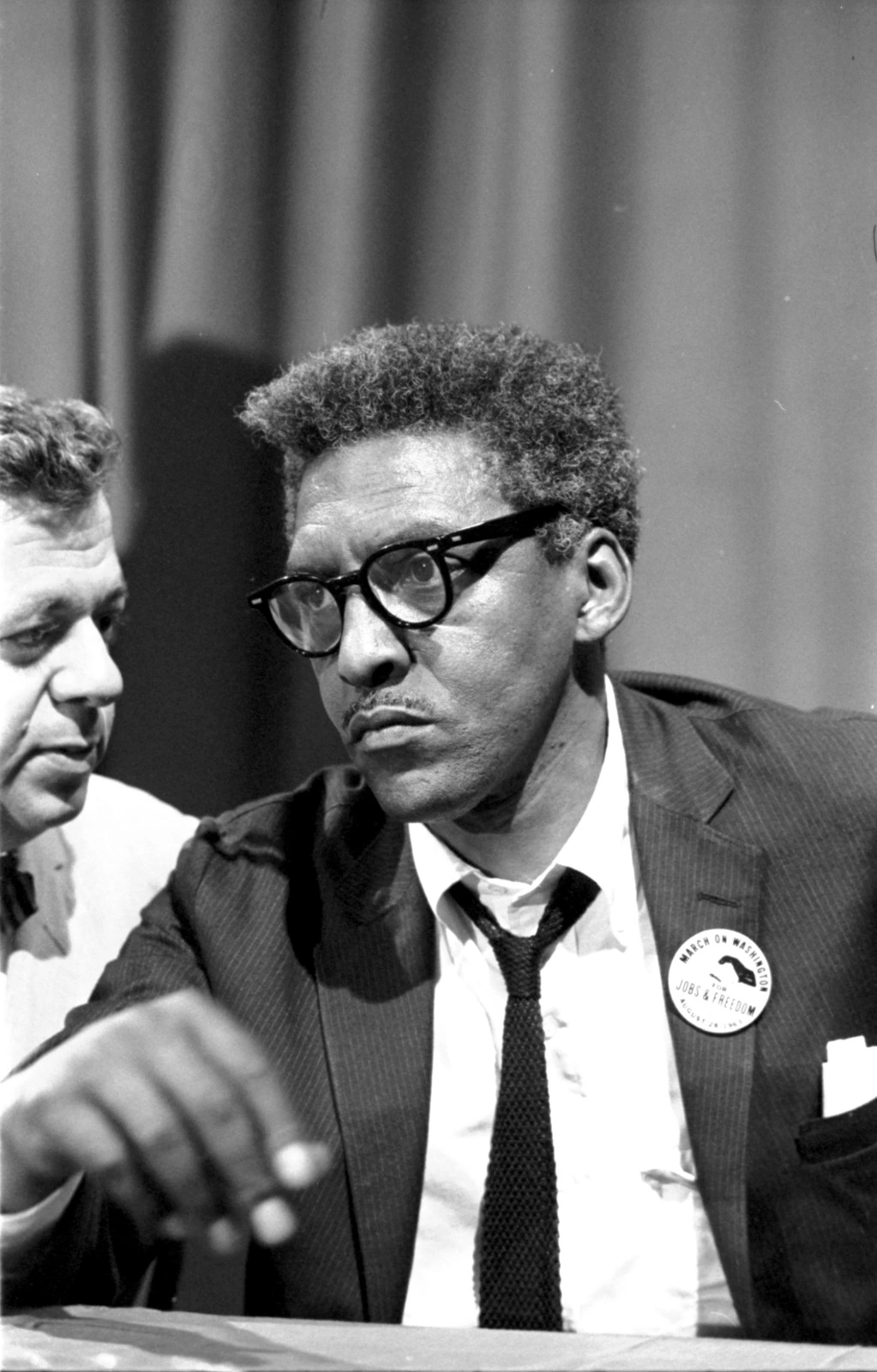
Bayard Rustin ran the day-to-day planning of the 1963 March on Washington, where Martin Luther King Jr. gave his 'I Have a Dream' speech. He led a team of 200 activists and organisers and arranged the buses, trains, marshals and sound. As a gay Black man in an openly homophobic era, he was repeatedly kept out of public view.

The veteran labour leader A. Philip Randolph brought Rustin in to organise the march in 1962. Roy Wilkins of the NAACP, wary of Rustin's past, would not let him take public credit, so Randolph became director and Rustin his deputy. Weeks before the march, Senator Strom Thurmond called Rustin a 'Communist, draft-dodger, and homosexual' and had the file on his 1953 arrest in Pasadena entered into the Congressional Record. That arrest had already forced Rustin out of the Fellowship of Reconciliation, the pacifist group he worked for. In 1947 he had organised the Journey of Reconciliation, the first Freedom Ride against segregation on interstate buses. In the 1980s, with his partner Walter Naegle, he spoke out for gay rights. He died in 1987; in 2013 Barack Obama awarded him the Presidential Medal of Freedom posthumously.