People and the past

History

Discover the people, inventions and events behind the world we live in.

Subject collectionPage 7Context and sources

Related subjects

Browse this subject and connected topics.

Keep reading below, or choose a related topic to explore something different.

DriveReading mode
StillnessReading mode
WonderReading mode
WonderArt

The Mexican painter Frida Kahlo (1907–1954) made herself the subject of most of her paintings. Her self-portraits show her injured body, her marriage, her Mexican roots and the traditional dress she wore, so together they tell the story of her life.

In 1925, aged 18, Kahlo was badly hurt in a bus accident in Mexico City and spent three months in bed. Her mother had an easel made that she could use lying down, with a mirror above it, and she began to paint the face she saw. She later explained that she painted herself because she was often alone and was the subject she knew best. She married the muralist Diego Rivera in 1929. Her small, detailed pictures drew on Mexican folk art and on the art of Mexico before the Spanish conquest, rather than on the huge public murals of her time. In 1939 the Louvre bought her painting The Frame, the first work by a Mexican artist in its collection. Her family home in Coyoacán, the Blue House, is now the Frida Kahlo Museum.
WonderArt

The Bauhaus, founded by the architect Walter Gropius in Weimar, Germany, in 1919, taught art, craft and industrial design in one school. In just 14 years it shaped modern furniture, typography and architecture with simple, useful forms suited to factory production.

Bauhaus means “building house” in German. Students began with a preliminary course on materials, shapes and colour, then trained in workshops for metal, weaving, furniture, printing and more, with the aim of designing objects that could be mass-produced. Teachers included the painters Paul Klee and Wassily Kandinsky, the weaver Gunta Stölzl and the artist László Moholy-Nagy. The school moved to Dessau in 1925, into a glass-fronted building designed by Gropius, and to Berlin in 1932. The Nazis attacked it as un-German and communist, and in 1933 it closed under their pressure. Many of its teachers emigrated: Gropius taught at Harvard, the last director, Ludwig Mies van der Rohe, went to Chicago, and Bauhaus-trained architects helped build the White City of Tel Aviv.

WonderArt

Cubism, developed in Paris from about 1907 by Pablo Picasso and Georges Braque, showed a person or object from several viewpoints at once, broken into flat, angular facets, instead of from one fixed angle as painters had done since the Renaissance.

Both painters were inspired by the late work of Paul Cézanne, who built landscapes and still lifes out of simple blocks of colour. Picasso's Les Demoiselles d'Avignon (1907) is often seen as the starting point. The name came from critics: in 1908 Louis Vauxcelles wrote that Braque reduced everything to 'cubes'. Historians divide the movement into two phases. In Analytic Cubism (about 1910–1912), objects were split into many small facets in mostly brown and grey tones. In Synthetic Cubism (about 1912–1914), shapes became simpler and colours brighter, and the artists began gluing real materials such as newspaper and wallpaper onto their pictures; Picasso's Still Life with Chair Caning (1912) is credited as the first Cubist collage. Cubism is often called the most influential art movement of the 20th century, and it fed into Futurism, Constructivism and abstract art.

WonderTechnology

In 1843 the English mathematician Ada Lovelace published notes on Charles Babbage's Analytical Engine, a mechanical computer that was designed but never built. Her Note G set out, step by step, how the machine could calculate Bernoulli numbers, and is often called the first published computer program.

Lovelace (1815–1852) was the daughter of the poet Lord Byron, and her mother had her taught mathematics from an early age. In 1842 the Italian engineer Luigi Menabrea published an article in French about Babbage's machine. Lovelace translated it into English and added seven notes, labelled A to G, about three times longer than the article itself. They appeared in September 1843 in Taylor's Scientific Memoirs, signed only with her initials, A.A.L. Bernoulli numbers are a sequence of numbers important in mathematics, and Note G turned their calculation into a table of instructions for the machine. Babbage had drafted simpler sample programs a few years earlier but never published them, which is why calling her 'the first programmer' is debated. Her boldest idea is not in doubt: she saw that such a machine could work with symbols of any kind, not just numbers, and might even compose music.

WonderTechnology

In September 1947, operators of the Harvard Mark II computer traced a fault to a moth trapped in one of its relays. They taped the insect into the logbook with the note 'First actual case of bug being found', a joke, as engineers already called faults 'bugs'.

A relay is a switch that is opened and closed by electricity; the Mark II calculated with electromechanical relays that clicked open and shut. 'Bug' for a small fault is much older than computers: in an 1878 letter, Thomas Edison described the little faults that show up in every invention as 'Bugs'. The moth story was popularised by Grace Hopper (1906–1992), a US Navy mathematician who worked on the Harvard machines and later helped create COBOL, one of the first programming languages written in English-like words. She did not find the moth herself; the operators on duty did, and they were probably making a pun on the two meanings of the word. The logbook page, with the moth still taped to it, is kept at the Smithsonian's National Museum of American History in Washington. Finding and fixing faults in software is still called debugging.

WonderTechnology

Email is older than the World Wide Web. People sharing one computer could leave each other messages by 1965, and Ray Tomlinson sent the first email between two networked computers in 1971. The web, a system of linked pages, was proposed by Tim Berners-Lee in 1989 and opened to the whole internet in 1991.

The internet and the web are often confused. The internet is the worldwide network that connects computers; the web is one service that runs on it, as email is another. By 1965 the Compatible Time-Sharing System at MIT, which let many users work on one central computer, had a MAIL command. In 1971 Tomlinson, at the American firm BBN, sent messages over ARPANET, the US research network that grew into the internet, and chose the @ sign for addresses. Email caught on fast: a 1973 study found that three-quarters of ARPANET traffic was email, and on 26 March 1976 Queen Elizabeth II sent one from the Royal Signals and Radar Establishment in Malvern, England. Berners-Lee wrote his proposal for the web at CERN, the physics laboratory near Geneva, and in April 1993 CERN made the web's software free for anyone to use, which helped it spread.

WonderTechnology

The first text message was sent on 3 December 1992 by Neil Papworth, a 22-year-old British engineer. He typed 'Merry Christmas' on a computer and sent it to the phone of Richard Jarvis, a Vodafone director who was at his office Christmas party.

Papworth worked for Sema Group, which was building a message centre for Vodafone's network in Britain, and the message was a test. Jarvis received it on an Orbitel 901, a handset that could display a text but not write one, so he could not reply. The idea of SMS, short for Short Message Service, was worked out in 1984 by Friedhelm Hillebrand of Deutsche Telekom and Bernard Ghillebaert of France Télécom for GSM, the new European mobile phone standard. Hillebrand counted the characters in typical postcards and telex messages and decided that 160 characters were enough for most short messages, and that became the limit. The first service letting customers text each other started in Finland in 1993; at first, Nokia was the only maker whose phones could all send texts. The 160-character limit also gave rise to texting shorthand such as 'gr8' and 'c u'.

WonderTechnology

In 1991 researchers at the University of Cambridge Computer Laboratory pointed a camera at the coffee machine in the Trojan Room, so colleagues could check from their desks whether the pot was full. In 1993 the picture went onto the World Wide Web, making it one of the first webcams.

Quentin Stafford-Fraser and Paul Jardetzky set it up so that nobody would make the trip to the coffee room only to find the pot empty. The camera took grey-scale pictures just 128 by 128 pixels, and at first they could be seen only on computers inside the laboratory's own network. In 1993 web browsers gained the ability to show pictures, and that November Daniel Gordon and Martyn Johnson put the camera on the World Wide Web. People around the world began watching a coffee pot in Cambridge, and it became one of the best-known sights of the early web. The camera was switched off on 22 August 2001, after the laboratory moved to a new building. The last coffee machine, a Krups, sold on eBay for £3,350; since 2016 it has been on permanent loan to the Heinz Nixdorf MuseumsForum, a computer museum in Paderborn, Germany.

WonderTechnology

On 3 April 1973 Martin Cooper, an engineer at Motorola, made the first public call from a handheld mobile phone while standing on Sixth Avenue in New York. He rang Joel Engel at the rival Bell Labs, which was working on phones for cars.

Until then a phone number belonged to a place: a house, an office, a phone box or, at best, a car. Car phones existed, but they needed about 14 kg of equipment in the boot. Cooper's prototype, the DynaTAC, weighed about 1.1 kg, was 25 cm long and was nicknamed 'the brick'. After ten hours of charging it gave about 30 minutes of talk; Cooper joked that this hardly mattered, because nobody could hold the phone up for that long. The call came just before a press conference at the New York Hilton, where Motorola presented its plans. It took ten more years to reach customers: the DynaTAC 8000X was approved in the United States in 1983 and went on sale the next year for $3,995. Cooper, born in Chicago in 1928, later founded several wireless communication companies.

WonderTechnology

In 1965 Gordon Moore, then research director at Fairchild Semiconductor, noticed that the number of components on a computer chip was doubling every year, and predicted that this would continue. In 1975 he revised the pace to every two years. The forecast became known as Moore's law.

A chip, or integrated circuit, is a small slice of silicon carrying many tiny electronic parts, above all transistors, the switches that do a computer's work. Moore made his prediction in an article called 'Cramming more components onto integrated circuits', written for the 35th anniversary issue of Electronics magazine. In 1968 he co-founded Intel. The Caltech professor Carver Mead popularised the name 'Moore's law' soon after 1975, although it was never a law of nature, only an observation that the industry then treated as a target. The results were enormous: Intel's first microprocessor, in 1971, had about 2,300 transistors, while the largest chips today hold more than 100 billion. Progress has slowed since around 2010, because parts are now so small that shrinking them further is difficult and expensive. Moore died in 2023.

WonderTechnology

On 25 August 1991 Linus Torvalds, a 21-year-old student in Helsinki, announced online that he was writing a free operating system, 'just a hobby'. He shared the code for anyone to study and improve, and volunteers and companies turned it into Linux, which now runs much of the internet and every Android phone.

Torvalds posted his announcement to comp.os.minix, an online discussion group about MINIX, a small teaching operating system he was using on his PC, and added that his project would not be 'big and professional'. Strictly, Linux is a kernel: the core of an operating system, which shares out the processor, memory and devices so that other programs can run. He first called it Freax, but Ari Lemmke, who ran the university server where the files were shared, named the folder Linux, and the name stuck. In 1992 Torvalds released the code under the GNU General Public License, which lets anyone use, change and share it as long as their versions stay open too; he later called this the best thing he ever did. Today thousands of developers around the world work on the kernel, and Linux also runs every one of the world's 500 fastest supercomputers.

WonderTechnology

Konrad Zuse's Z3, completed in Berlin in 1941, is regarded as the world's first working programmable, fully automatic digital computer. It calculated with about 2,600 relays, switches worked by electricity, and read its programs from holes punched in strips of film.

Zuse (1910–1995) was a civil engineer whose first job, at an aircraft factory, meant doing many routine calculations by hand, which led him to design machines to do them. From 1936 he built computers in his parents' flat in Berlin. His first, the Z1, was purely mechanical and unreliable; the Z3 used relays instead. It used binary numbers, made only of 0s and 1s, which suit switches that are either on or off, and floating-point arithmetic, a way of handling very large and very small numbers. It helped with calculations on wing flutter, a dangerous vibration in aircraft wings. The original was destroyed in an Allied bombing raid on Berlin on 21 December 1943, but Zuse's company built a working replica in 1961, now in the Deutsches Museum in Munich. In 1998 the computer scientist Raúl Rojas showed that the Z3 could, in principle, compute anything a modern computer can.

WonderTechnology

GPS, the Global Positioning System, was built by the US Department of Defense from 1973 for the military. A receiver, like the one in your phone, works out where it is by timing signals from at least four satellites orbiting about 20,200 km up. Since 2000 it has been accurate to a few metres for everyone.

Each GPS satellite carries very precise atomic clocks and constantly broadcasts the time and its own position. Radio signals travel at the speed of light, so the delay tells the receiver how far away each satellite is: three satellites fix a position, and a fourth corrects the receiver's own, less accurate clock. The clocks even have to allow for Einstein's relativity. Seen from the ground, they run about 38 microseconds a day fast, which would otherwise add kilometres of error every day. After a Korean airliner strayed into Soviet airspace and was shot down in 1983, President Ronald Reagan promised that GPS would be free for civilian use. At first the civilian signal was deliberately degraded to an accuracy of about 100 metres, a policy called Selective Availability; President Bill Clinton ended it on 1 May 2000. Europe's Galileo, Russia's GLONASS and China's BeiDou now work alongside GPS.

WonderTechnology

In 1965 Eric Johnson, an engineer at Britain's Royal Radar Establishment in Malvern, described a screen that sensed the touch of a fingertip, intended for air traffic control. Screens that sense touch the same basic way, called capacitive, reached mobile phones only in 2007, more than 40 years later.

Johnson described the idea in a short article in the journal Electronics Letters in 1965, and in more detail in 1967. His screen had fine wires across its face. A finger touching them changed their capacitance, their ability to store an electric charge, and the electronics detected where. Today's phones use the same principle through a transparent conducting layer under the glass, which is why a thick glove usually does not work. In the early 1970s Frank Beck and Bent Stumpe built a transparent touchscreen for a control room at CERN. In the late 1970s the American company Elographics developed resistive screens, which sense two layers being pressed together, so any object can work them. IBM's Simon, sold from 1994, is widely seen as the first touchscreen phone. The LG Prada, released in May 2007, was the first phone with a capacitive screen, shortly before the first iPhone.

WonderTechnology

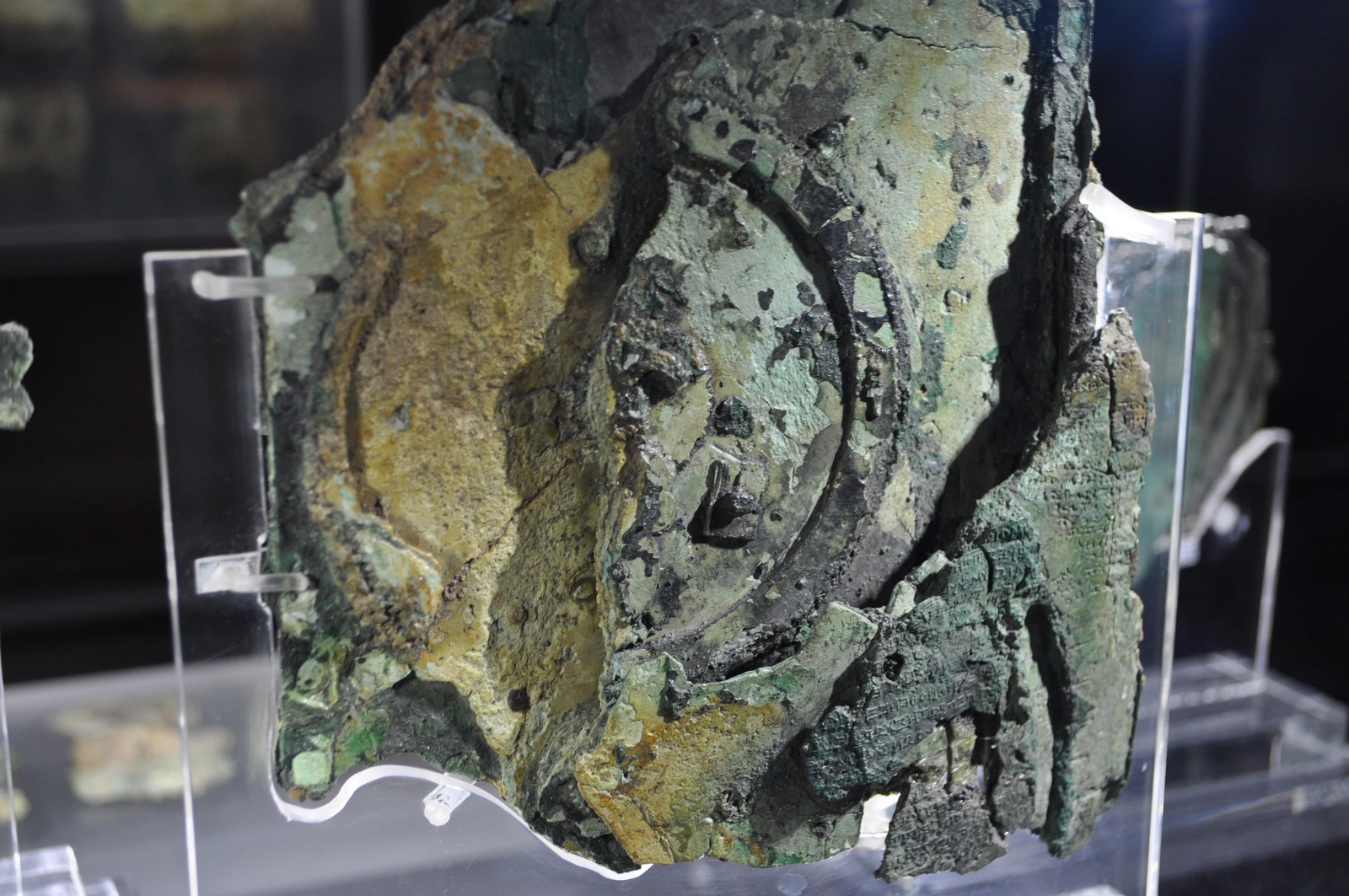
The Antikythera mechanism, an ancient Greek bronze device that modelled the sky with gears, is more than 2,000 years old and survives only as corroded fragments. From 2005 researchers scanned them with X-rays in 3D, reading hidden text and working out how the gears predicted eclipses.

The mechanism was recovered in 1901 from a Roman-era shipwreck off the Greek island of Antikythera and is kept, in 82 fragments, at the National Archaeological Museum in Athens. In 2005 a team led by Mike Edmunds of Cardiff University, with Tony Freeth, scanned the fragments using high-resolution X-ray tomography, the method behind hospital CT scans: many X-ray images taken from different angles are combined into a 3D picture, so the researchers could look through the crust layer by layer. A Hewlett-Packard team also photographed the surfaces lit from many directions to bring out faint letters. The results, published in Nature in November 2006, doubled the amount of deciphered inscription. They also showed that a pin-and-slot arrangement of gears copied the Moon's changing speed across the sky, following a theory of the astronomer Hipparchus. The lost front display, which probably showed the planets, is still partly reconstructed by educated guesswork.

WonderHistory

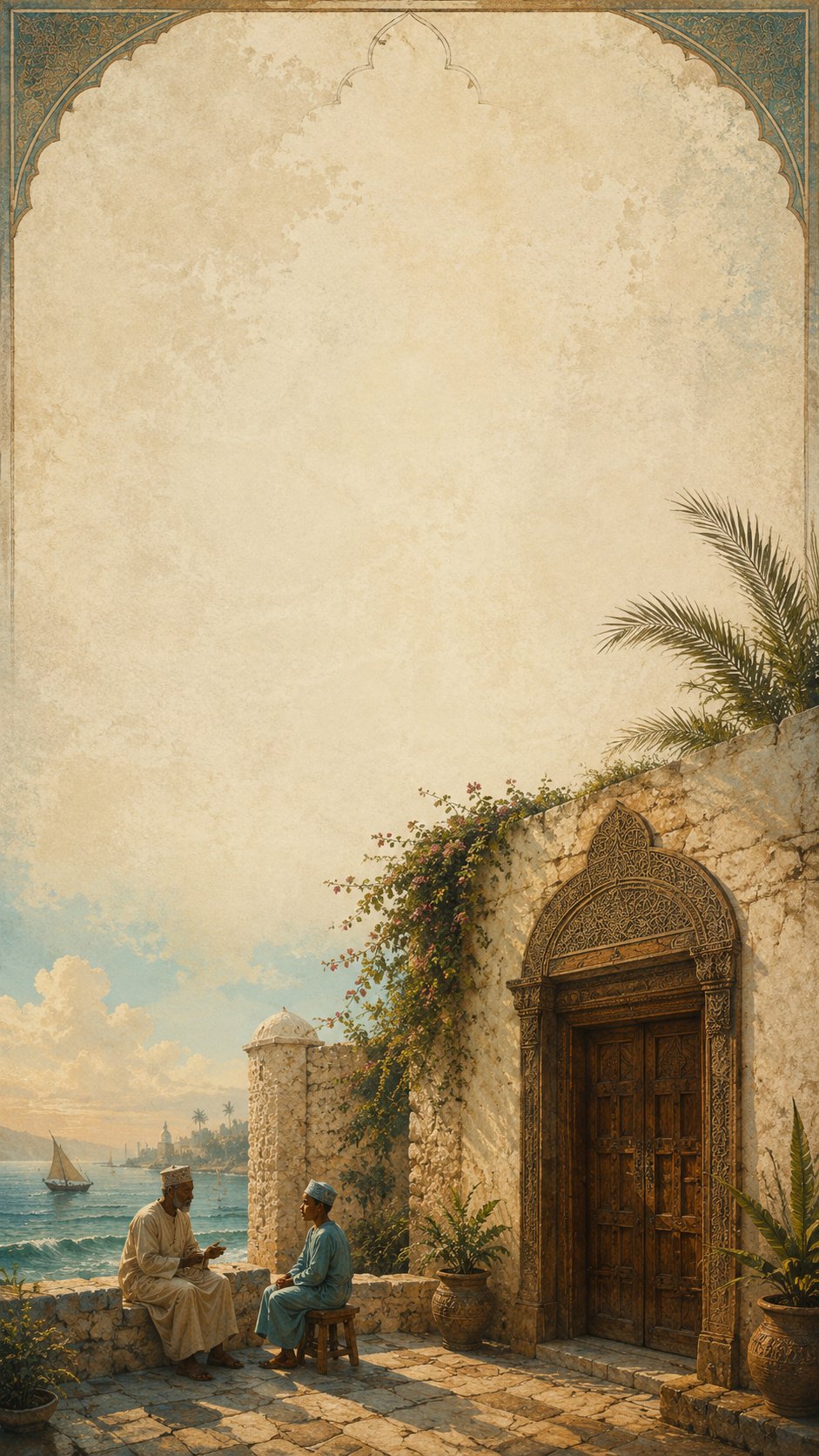
The shortest war on record was fought on 27 August 1896, when British warships shelled the sultan's palace in Zanzibar, an island state off East Africa, after a new sultan had taken power without British approval. The fighting lasted between 38 and 45 minutes.

Zanzibar, today part of Tanzania, had been a British protectorate since 1890, and under that agreement a new sultan needed the approval of the British consul. When the pro-British Sultan Hamad bin Thuwaini died suddenly on 25 August 1896, Khalid bin Barghash, a son of an earlier sultan, moved into the palace and declared himself sultan, while Britain wanted Hamoud bin Mohammed. The British gave Khalid until 9 a.m. on 27 August to stand down. When the deadline passed, three ships opened fire at 9.02, the palace caught fire, the sultan's old royal yacht was sunk, and the shooting stopped at about 9.40. Around 500 of the sultan's defenders were killed or wounded, while one British sailor was injured. Khalid took refuge in the German consulate and escaped to German East Africa. Hamoud became sultan, and Zanzibar stayed under strong British influence until independence in 1963.

WonderHistory

Napoleon Bonaparte was about 1.69 metres tall, roughly average for a Frenchman of his day. The myth that he was tiny grew from confusion between French and English units of length and from British cartoons that mocked him as ‘Little Boney’.

At his autopsy on St Helena in 1821, Napoleon's height was recorded in old French units as 5 pieds 2 pouces 4 lignes. French units were longer than English ones, so this comes to about 1.69 metres. Read as English feet and inches, ‘5 foot 2’ suggests about 1.57 metres, and the mistake stuck. British caricaturists, above all James Gillray, drew him as a tiny, bad-tempered figure called ‘Little Boney’, short for Bonaparte. His soldiers' nickname for him, le Petit Caporal (the Little Corporal), was a term of affection, traditionally dated to the Battle of Lodi in 1796, and had nothing to do with his height. The myth even gave its name to the ‘Napoleon complex’, the idea that short men are more aggressive, for which studies have found only mixed evidence.

WonderHistory

In 1324 Mansa Musa, ruler of the Mali Empire in West Africa, crossed the Sahara on pilgrimage to Mecca with a huge caravan and a vast supply of gold. He gave away so much in Cairo that, according to a writer there, the value of gold in Egypt stayed lower for years.

Mali's wealth came from the gold fields of West Africa and the trade across the Sahara. Most of what we know about Musa's journey comes from Arabic writers, above all al-Umari, who wrote in Cairo about twelve years later. He reported that before Musa arrived a mithqal of gold was worth 25 silver dirhams, and that afterwards it fell below 22 and stayed there for at least twelve years. Some historians think this was within normal swings in Egyptian prices, and figures such as tonnes of gold carried by camels are later estimates, not counts. By the end of the trip Musa had run short and borrowed from Cairo merchants. He brought scholars home with him, among them the Andalusian poet Abu Ishaq al-Sahili, and helped make Timbuktu a centre of learning. The Catalan Atlas, a map made in 1375, shows him holding gold.

WonderHistory

The Black Death, a pandemic of plague, killed an estimated 30 to 60 per cent of Europe's population between 1346 and 1353, up to 50 million people. With so few left to farm and work, labour became scarce, and landlords and rulers struggled to hold down wages.

The disease was plague, caused by the bacterium Yersinia pestis and spread mainly by the bites of fleas that live on rats. It reached Europe in 1347, reportedly from the siege of Caffa, a Genoese trading port in Crimea, and travelled along Mediterranean shipping routes to Sicily, Italy and beyond. It also struck Cairo and much of the Middle East. Because so many workers died, survivors could ask for more pay and better terms. In England, the Statute of Labourers of 1351 tried to cap wages at pre-plague levels and stop workers moving in search of better offers. Europe's population did not return to its earlier level until the 16th century, and plague kept coming back for centuries. People at the time spoke of the great pestilence or great death; the name ‘Black Death’ became usual only much later.

WonderHistory

Contrary to a popular legend, the Great Wall of China cannot normally be seen from space with the naked eye. It is thousands of kilometres long but only a few metres wide, and it is built from local stone and earth that blend into the land around it.

The idea is older than spaceflight. In 1754 the English antiquarian William Stukeley wrote that the Chinese wall might be made out from the Moon, and the claim spread from there. From the Moon, about 384,000 kilometres away, seeing the wall would be like spotting a human hair from 3 kilometres. From low Earth orbit, a few hundred kilometres up, NASA says it is barely visible, and only in near-perfect conditions; it stands out no more than many other human-made structures. Yang Liwei, China's first astronaut, said after his flight in 2003 that he had looked for it and could not see it. A survey completed in 2012 by China's cultural heritage authority put the length of all the wall's sections, trenches and natural barriers at 21,196 kilometres.

WonderHistory

Around 1440 Johannes Gutenberg, a craftsman from Mainz in Germany, developed a way of printing with movable metal type: single letters cast in metal, set into pages, inked, pressed onto paper and then reused. It made books far faster and cheaper to produce in Europe.

Movable type was not new everywhere. In China, Bi Sheng made clay type in the 11th century, and in Korea a Buddhist text called the Jikji was printed with metal type in 1377. Gutenberg's contribution was a complete system suited to the Latin alphabet's small set of letters: a metal mix of lead, tin and antimony that cast quickly, a hand mould for making identical letters, an oil-based ink that clung to metal, and a wooden screw press like those used for pressing grapes and olives. His Bible, finished in Mainz around 1455, was printed in about 180 copies. By 1500 some 270 European cities had printers, and their presses had produced over 20 million copies of books, helping to spread the ideas of the Renaissance and the Reformation.

WonderHistory

In the 1630s the Dutch Republic saw prices for rare tulip bulbs climb to extraordinary levels before they collapsed in February 1637. Tulip mania is often called the first recorded speculative bubble, when prices soar far above real value because buyers expect to sell on at a profit.

Tulips reached Europe from the Ottoman Empire in the 16th century, and the botanist Carolus Clusius planted them at Leiden in 1593. The most prized bulbs produced flamed, streaked petals; we now know the pattern was caused by a virus, which also made the bulbs slower to multiply. The rarest, such as the Semper Augustus, changed hands for up to 10,000 guilders. Much of the trade was in contracts for bulbs still in the ground, agreed in taverns over the winter of 1636–37; the Dutch called it windhandel, ‘wind trade’, because no bulbs changed hands. The story became famous through Charles Mackay's 1841 book Extraordinary Popular Delusions and the Madness of Crowds, which described widespread ruin. The historian Anne Goldgar's 2007 study of the records found a fairly small group of traders and very few bankruptcies.

WonderHistory

In 1893 New Zealand, then a self-governing British colony, became the first country in which all adult women could vote in parliamentary elections. The law was signed on 19 September, and women voted for the first time in the election that November.

The change followed years of campaigning led by Kate Sheppard and the Women's Christian Temperance Union, a movement that wanted to curb drinking and believed women's votes would help. Campaigners sent Parliament a series of petitions; the last, in 1893, carried nearly 32,000 signatures, almost a quarter of the adult European women in the colony. The Electoral Act gave the vote to all women aged 21 and over, Māori women included. Women could not stand for Parliament until 1919, and the first woman MP, Elizabeth McCombs, was elected in 1933. Since 1991 Kate Sheppard's portrait has appeared on New Zealand's ten-dollar note. In Turkey, women won the right to vote and stand in parliamentary elections in 1934.

WonderHistory

The Mongol Empire, founded by Genghis Khan in 1206 and enlarged by his sons and grandsons, became the largest contiguous land empire in history. In the late 13th century it stretched in one unbroken block from the Sea of Japan to Eastern Europe.

Genghis Khan was born Temüjin around 1162. After uniting the nomadic tribes of the Mongolian steppe, he was proclaimed ruler of all the Mongols in 1206, and by his death in 1227 his armies held lands from northern China to the Caspian Sea. His heirs pushed on into Russia, Iran and the rest of China. At about 24 million square kilometres, it was second in size only to the British Empire, whose lands were scattered across the oceans. The conquests were extremely destructive, yet the order the Mongols then imposed, known as the Pax Mongolica, made long-distance trade along the Silk Road safer. A network of relay stations, the Yam, let messengers change horses and cover up to 200 kilometres a day. By 1294 the empire had split into four states: the Golden Horde, the Chagatai Khanate, the Ilkhanate in Iran and the Yuan dynasty in China.