Words in motion

Language

How speech, writing and translation carry memory between people and across centuries.

Subject collectionPage 5Context and sources

Related subjects

Browse this subject and connected topics.

Cards are connected by subject and reading mode. Continue below or open a related subject.

DriveReading mode
StillnessReading mode
WonderReading mode
Q1646
WonderLanguage

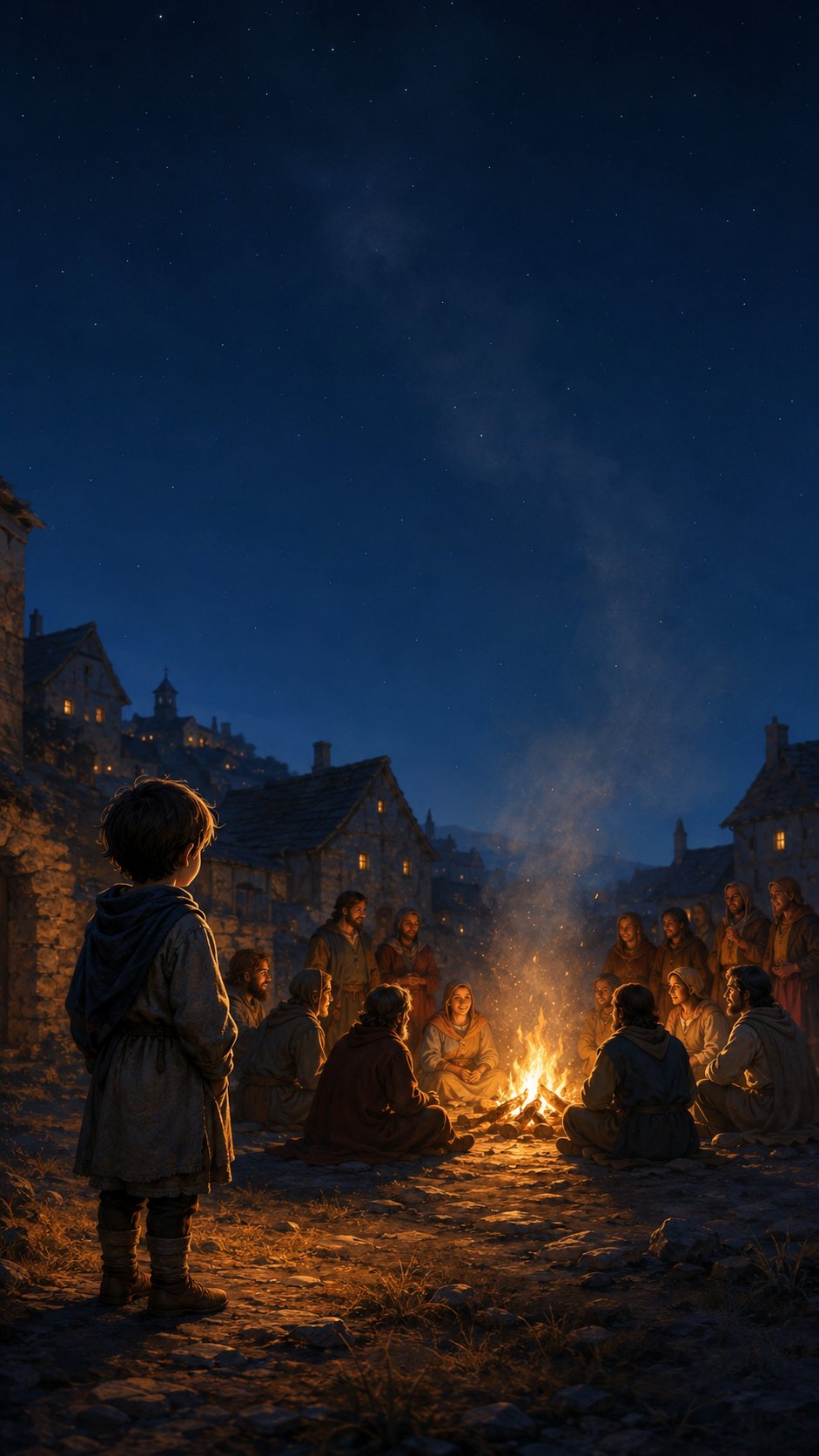
When Nicaragua opened its first schools for deaf children in the 1980s, the pupils had no shared language. Within a few years they had spontaneously created one — with grammar the adults had never taught them.

The children arrived using improvised home signs, unintelligible to one another. Thrown together, they built a shared pidgin — and then the younger intake did something remarkable: they regularised it, adding consistent grammatical structure their older schoolmates had not used. Each new cohort of young children made it more systematic. Linguists including Judy Shepard-Kegl and Ann Senghas documented it as it happened, making it the only time a human language has been observed being born. It suggests grammar is something children impose, not merely absorb.
Q1647
StillnessLanguage

Tsundoku is the practice of acquiring books and letting them pile up unread. The word carries no reproach — it combines 'piling things up' with 'reading', and Japanese usage treats the pile as fairly harmless.

It appears in print as early as the 1870s, originally as a mild joke about scholars whose collections outran their reading. The affection in it is the point: a stack of unread books is a record of intentions, curiosity and optimism, not a moral failure. The writer Umberto Eco kept a library of tens of thousands of volumes and argued the unread ones were the valuable part — a private reminder of how much there is still to know. English borrowed the word only recently, which suggests the need was there all along.

Q1673
DriveLanguage

Louis Braille lost his sight at three. At fifteen he took a military code of raised dots meant for reading orders in the dark, cut it down, and produced the system blind people read with two centuries later.

The army system used twelve dots per character and was too wide for a fingertip to read at once. Braille reduced it to six, so a single touch takes in a whole letter — the insight that made reading by hand fluent rather than laborious. His school refused to adopt it during his lifetime; sighted teachers preferred embossed Roman letters, which were far harder to read and impossible to write. Pupils learned it in secret. It was adopted two years after he died of tuberculosis at forty-three.

Q1674
DriveLanguage

Sequoyah was a Cherokee silversmith who could not read English or anything else. Over twelve years he worked out a set of symbols for the sounds of his own language. Within a few years, much of the Cherokee Nation was literate.

He was mocked for years; neighbours thought he was practising witchcraft or losing his mind, and his work was once burned. He first tried a symbol for every word, then realised the language could be broken into syllables, and settled on around 85 characters. To prove it worked he had his young daughter read aloud a message she could not have known. Adoption was extraordinarily fast — the Cherokee were soon printing a newspaper in it. He remains one of the very few people in history to have single-handedly invented a writing system that a whole nation adopted.

Q1675
DriveLanguage

Korean was written in Chinese characters, which took years to learn and kept literacy with the wealthy. In 1443 King Sejong commissioned a new alphabet simple enough, he said, for a wise man to learn in a morning.

Hangul was designed rather than inherited, and the design is deliberate: the consonant shapes sketch the position of the tongue and lips that make each sound, and letters are grouped into neat syllable blocks. The scholarly class objected fiercely, seeing it as a threat to their standing and to ties with China, and it was suppressed for long stretches. It survived, and South Korea now marks a public holiday for it. Linguists regularly describe it as among the most rational writing systems ever devised.

Q1676
DriveLanguage

Hebrew had not been anyone's everyday spoken language for centuries. Eliezer Ben-Yehuda raised his son hearing nothing else, coined thousands of words for things the old texts never mentioned, and lived to hear it spoken in the street.

Hebrew had survived in prayer, scholarship and letters, but not as a mother tongue. Ben-Yehuda's son, born in 1882, is generally described as the first native speaker in generations — an upbringing so isolating that the boy reportedly did not speak until he was four. Ben-Yehuda compiled a dictionary and invented vocabulary for ice cream, bicycle, newspaper, tomato. Reviving a language this way remains essentially unrepeated: it is now the daily language of millions.

Q1691
DriveLanguage

The Wampanoag language had no speakers left for over a century. Jessie Little Doe Baird taught herself to read it from old documents, rebuilt it word by word, and raised her daughter as its first native speaker in generations.

The language survived only in writing — including a seventeenth-century Bible translation and land deeds written by Wampanoag people themselves, an unusually rich written record for a Native American language. Baird began the work after a series of dreams, took a master's in linguistics to do it properly, and produced a dictionary of more than ten thousand words. Her daughter Mae grew up speaking it. Baird received a MacArthur Fellowship in 2010. Reviving a language with no living speaker had been considered essentially impossible.

Q1692
DriveLanguage

By the 1970s few Māori children were growing up speaking Māori. The response was the language nest: preschools where elders looked after the youngest children and spoke nothing but Māori to them all day.

The name means language nest. The first opened in 1982, and within a few years there were hundreds. The insight was that a language does not survive by being taught as a subject; it survives by being the ordinary medium of daily life at the age when children absorb it without effort. Fluent elders were the scarce resource, and putting them with toddlers used them where they mattered most. The model has since been adopted for Hawaiian, Welsh, Irish and several First Nations languages.

Q1693
StillnessLanguage

Gezellig describes a room, an evening or a group of people that feels easy and warm — not the furniture, and not the event, but the atmosphere between people when nobody is trying. The Dutch treat it as untranslatable.

It attaches to almost anything: a café can be gezellig, so can a conversation, a chair, or a Tuesday. What it always means is a shared, unforced comfort — which is why an expensive restaurant can fail to be gezellig and a cramped kitchen can manage it easily. It is close to Danish hygge but more social; hygge can be solitary, gezellig usually needs at least one other person. Dutch speakers reach for it constantly, and reliably say it is the first thing they miss in English.

Q1694
StillnessLanguage

Sobremesa is the stretch after a meal when nobody clears the plates and nobody leaves — the talking, the second coffee, the sitting. It is not a break from the meal. In Spain it is understood to be part of it.

Literally 'over table'. It can run twenty minutes or three hours, and it is unhurried by design — the point is that nobody has anywhere to be. The word exists partly because the thing is culturally protected: lunch is long, and the conversation after it is not treated as time taken from something more important. English has no equivalent, and the lack is telling. Several public health researchers studying Mediterranean eating patterns have argued the sobremesa may matter as much as the food.

Q1695
DriveLanguage

Meraki means doing something with such care that something of you ends up in it — cooking, laying a table, finishing a wall. It is the difference between completing a task and leaving a trace.

The word came into Greek from Turkish merak, curiosity or keen interest, and shifted towards the soul or creative energy a person puts into what they make. Greeks apply it to ordinary work rather than art — a plate arranged with meraki, a room painted with it. The implication is quietly demanding: it is possible to do a job correctly and still not do it with meraki, and everyone can tell the difference, including you.

Q1696
StillnessLanguage

Yūgen points at a depth you feel without being shown — wind moving through a forest you cannot see into, a voice trailing off, the sense that something vast lies just past what is in front of you.

The term came from Chinese philosophical writing and was taken up in medieval Japanese poetry and noh theatre, where it became a central goal: to suggest rather than state. The playwright Zeami described it partly through images — a swan holding a flower in its bill, geese seen through distant clouds. The principle behind it is restraint. What is fully shown is finished; what is half-hidden keeps working on you afterwards. It is a useful idea well outside art, and it explains why the best endings are rarely the ones that explain everything.

Q1711
WonderLanguage

In Jiangyong, China, women developed Nüshu — a slender script used in letters, songs and embroidery, passed between women when formal schooling was closed to most of them.

Nüshu means 'women's writing'. It grew in the Xiao River valley of Hunan province, where girls and women used it for sworn-sister letters, wedding laments and songs that could travel inside cloth. Its fine, tilted characters look almost like stitching because much of its life was bound to fans, booklets and embroidery. A script can be a shelter: a place to store feeling when the public language does not make room for you.

Q1713
WonderLanguage

Silbo Gomero turns spoken Spanish into whistles that carry across the ravines of La Gomera, letting a sentence travel farther than a shout.

Silbo Gomero is not a separate language. It maps the sounds of Spanish into a small set of piercing whistles shaped by pitch and breaks, useful on an island where a neighbour may be visible across a ravine but an hour away on foot. UNESCO notes that it has been taught in schools since 1999. The beautiful part is practical: geography asked for a longer voice, and people made one.

Q1714
WonderLanguage

In 1999 Shigetaka Kurita designed 176 emoji on a 12-by-12 grid, giving early mobile messages a way to carry weather, tone and feeling.

Kurita's original emoji were tiny, practical drawings for Japanese phones and pagers: hearts, clouds, trains, faces, symbols. MoMA later acquired the set because design does not have to be large to change behaviour. Those little squares made text feel less bare. They reminded digital messages that a body, a mood and a raised eyebrow were missing.

Q1715
StillnessLanguage

Toki Pona is a complete constructed language with about 120 to 140 core words. Its limit is the point: it makes speakers choose the simplest useful shape of a thought.

Toki Pona is often described as minimalist, but the better word is deliberate. Instead of adding a separate word for every shade of meaning, it asks the speaker to build from a small set of roots. Friend becomes good person. Tool becomes a useful thing. The exercise is not only linguistic; it is mental tidying. You find out which parts of a thought are load-bearing and which are decoration.

Q1716
WonderLanguage

Around 405 CE Mesrop Mashtots created the Armenian alphabet, giving Armenian speech a written form that could carry scripture, history and identity.

The invention was not merely technical. A script lets a language hold law, prayer, argument, memory and schoolroom repetition. After the alphabet appeared, Armenian translation and literature accelerated, and a spoken identity gained a durable written architecture. Some tools do not just record a culture. They give it a spine.

Q1717
WonderLanguage

The International Phonetic Alphabet gives linguists a shared way to write speech sounds precisely, even when ordinary spelling refuses to tell the truth.

English spelling says cough, though, through and rough as if the same letters were loyal. They are not. The IPA steps around spelling and writes the sound itself: where the tongue is, whether the lips round, whether the voice vibrates. It is one of science's quieter acts of respect for language — listening closely enough to make a symbol for what is really there.

Q1718
WonderLanguage

Morse code gives the shortest signals to frequent letters: E is one dot, T one dash. It turned language into a design problem measured in time.

The brilliance is compression. A rare letter can afford a longer pattern; a common one cannot. Alfred Vail studied type cases and newspaper frequency while shaping the code, so ordinary English could move faster over wire. Before data compression had a name, telegraphers were already asking the modern question: what do people say most often, and how do we spend fewer signals saying it?

Q1733
DriveProverbs

Drop by drop, a lake is formed.

The proverb is usually used for saving money, but its reach is wider. A page a day, a kind word repeated, a language practised badly but faithfully, a repair made before collapse — small acts become geography when they keep arriving. The lake is not a miracle. It is accumulation made visible.

Q1734
StillnessProverbs

He aha te mea nui o te ao? He tangata, he tangata, he tangata — what is the most important thing in the world? It is people.

The line is often quoted in Aotearoa New Zealand because it refuses to let value become abstract. Not wealth, not status, not the plan: people. In Māori contexts it belongs to a wider ethic of relationship, care and responsibility. It is simple enough to sound obvious, which is why it bears repeating. Most failures of judgement begin by forgetting it.

Q1764
WonderMigration

The Bantu migrations spread related languages, farming knowledge and iron-working across much of central, eastern and southern Africa over many centuries.

The Bantu expansion was not a single march; it was a long series of movements, settlements and encounters. Linguistics, archaeology and genetics all point to communities carrying crops, pottery, metalworking and words across huge ecological zones. The result was not one culture replacing a continent, but an intricate reshaping: people mixed, technologies travelled, and hundreds of related languages became living archives of movement.

Q1789
WonderMigration

The Austronesian expansion spread languages and maritime technologies from Taiwan and Island Southeast Asia across the Pacific and Indian Ocean world.

The Austronesian expansion is one of history's great acts of maritime imagination. Canoes, sails, crops, animals, stories and words moved through island worlds where the horizon was not an ending but a problem to be solved. Linguistic kinship still links places separated by astonishing distances. A family of languages became a map of courage, craft and return routes over open water.

Q1807
StillnessMusic

Fado is Portugal's urban song tradition, usually joining solo voice, poetry, guitar and Portuguese guitarra in performances shaped by longing, memory and city life.

Fado is often translated through saudade, but it is richer than one word. It grew in Lisbon as an urban practice where voice, poem and stringed instruments turn longing into form. The singer does not explain the feeling away; the performance holds it, phrases it and lets listeners inhabit it together. Some music comforts by lifting sadness. Fado comforts by giving sadness a beautiful chair.