Collection 04

Art and attention

Cards about art, music, craft, perception and the habit of looking more closely.

36 cardsWonder4 connected topics

Curator's note

A route, not a ranking.

Art rewards sustained attention. This room moves between makers, materials and perception, asking what becomes visible when looking slows down.

Q1635
DriveArt

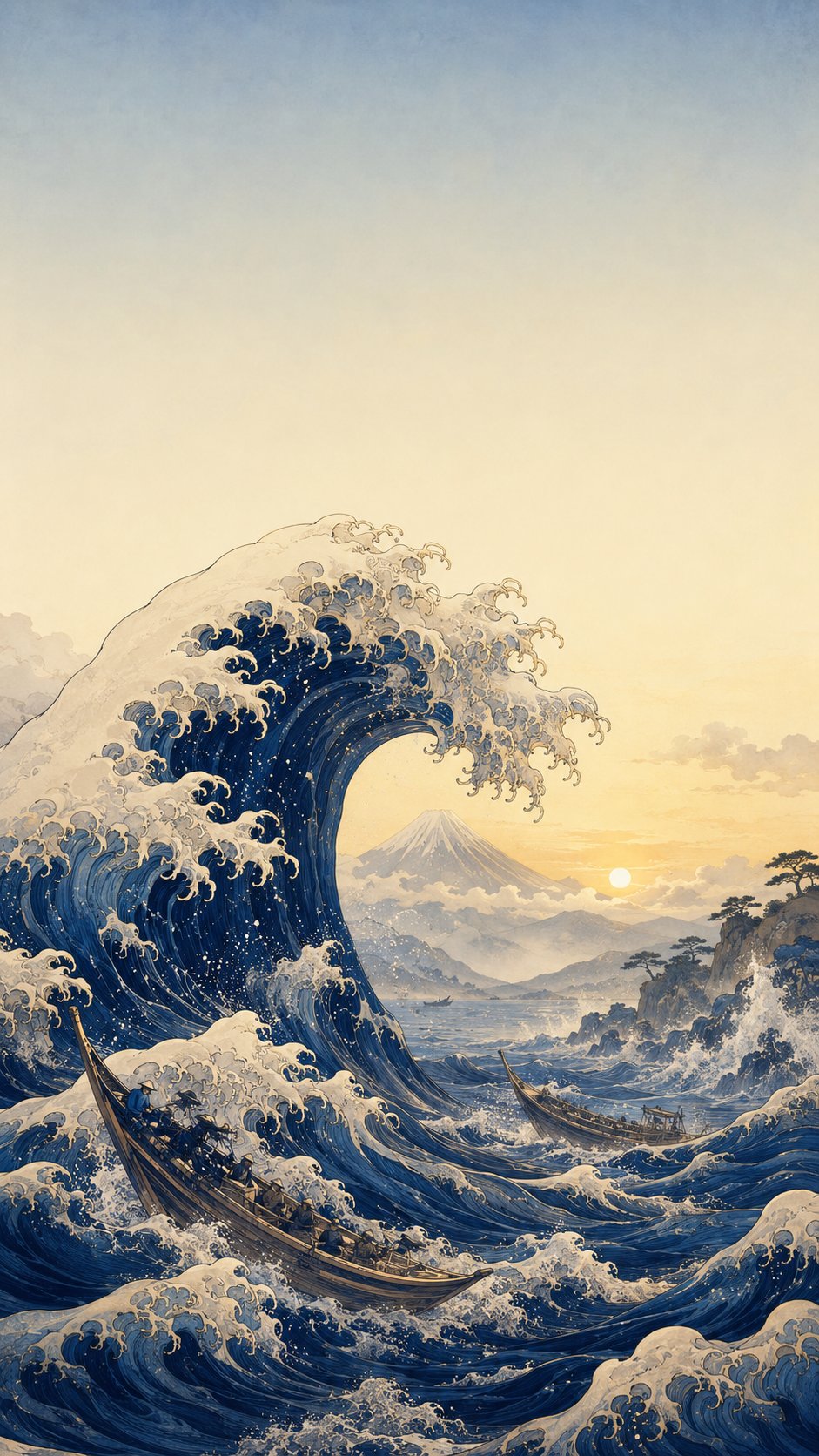
Hokusai — the artist behind the famous print of a curling blue wave — had already made it when he wrote that everything he produced before the age of seventy was not worth taking into account, and that by a hundred and ten every dot he made would be alive.

The passage comes from a postscript he wrote at about seventy-five. He describes drawing obsessively from the age of six, dismisses his entire earlier output, notes that at seventy-three he had begun to grasp the real structure of animals, plants and birds, and projects forward: at eighty he would make more progress, at ninety penetrate the mystery of things, at a hundred reach something marvellous. He signed some late work 'the old man mad about drawing', and kept working until he died at eighty-eight.

Q1728
WonderMusic

Stravinsky's 1913 ballet The Rite of Spring shocked Paris with pounding rhythm and jagged movement; the riot story grew later, but the rupture was real.

The famous premiere has been polished into legend: a near-riot, scandal, chairs, outrage. Some of that grew in the retelling. What did not need exaggeration was the music's force. Accents landed where audiences did not expect them, dancers stamped instead of floated, and spring arrived not as pastel renewal but as sacrifice. Modernism often begins by making the body lose its old count.

Q1862
WonderArchaeology

The Pazyryk carpet, made in the fifth or fourth century BCE and preserved in a frozen Altai tomb, is the oldest surviving knotted-pile carpet known today.

Its borders carry processions of riders, deer and griffin-like forms with astonishing control of rhythm and scale. More than 1.2 million knots turn wool into a portable architecture of colour. Scholars still debate where it was woven, which is part of its power: the carpet belongs to a mobile ancient world of exchange, skill and shared motifs. Cold preserved the object; design preserved the movement inside it.

Q1867
WonderArchaeology

The Trundholm Sun Chariot pairs a horse with a bronze disc, gilded on one side, in a wheeled image of the sun's imagined journey across the sky.

Made around 1400 BCE, the object is both sculpture and cosmological machine. One face of the disc shines with gold; the other remains dark, inviting an interpretation of day and night, though no written explanation survives. Tiny wheels let a vast celestial idea move by hand. The model does not reduce the sun. It makes an unreachable cycle intimate enough to pull across the ground.

Next collectionHidden history