 Q2037
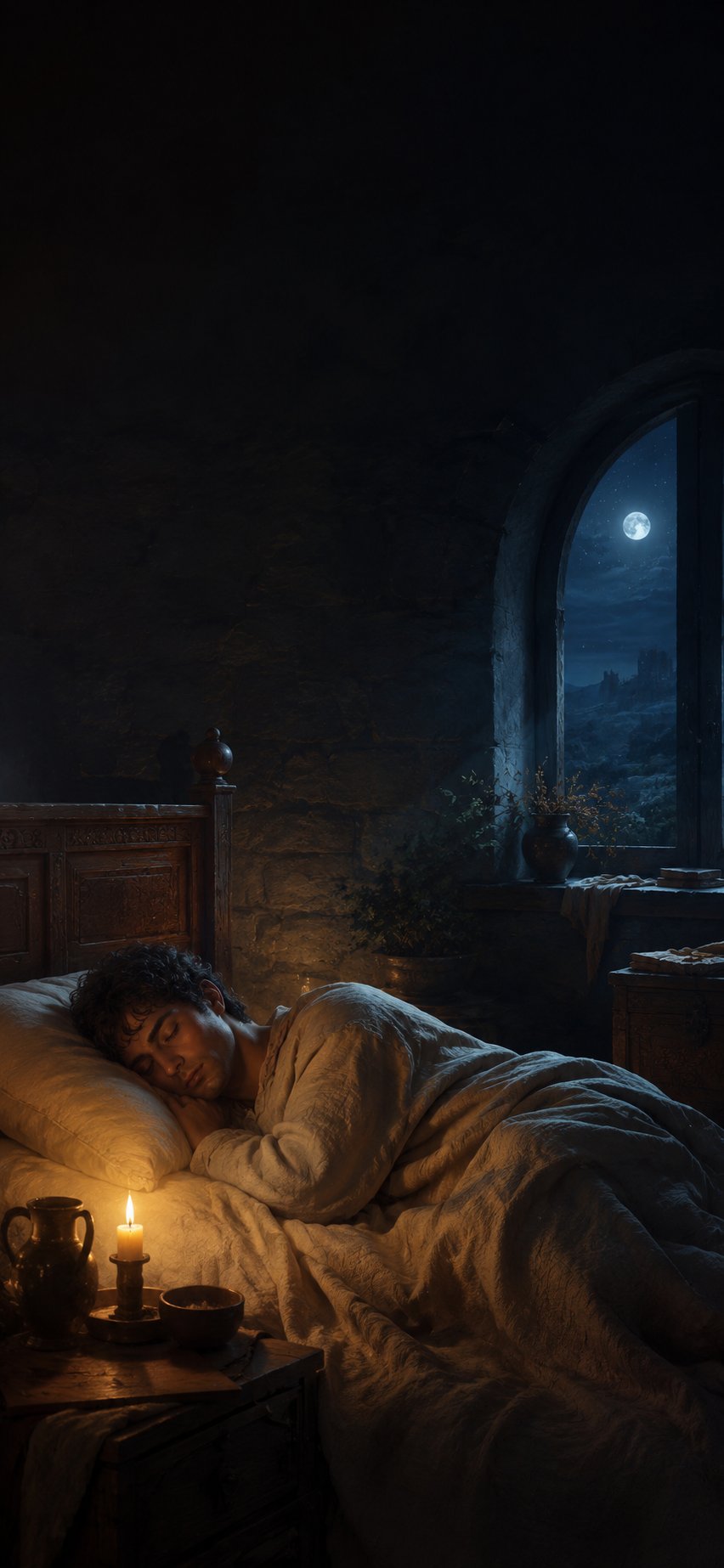
Q2037Before artificial light, much of Europe slept in two shifts: a 'first sleep' from nightfall, an hour or so of quiet wakefulness, then a 'second sleep' until dawn. The pattern appears in court records, prayer books and letters across languages.
Historian Roger Ekirch pieced the habit together from thousands of references — people used the waking interval to pray, talk, mend, or simply lie thinking in the dark. The rhythm faded in the nineteenth century as gaslight and industrial timetables compressed the night. Evidence suggests it ruled pre-industrial Europe rather than all humanity, so it is best read not as a prescription, but as a reminder: the eight-hour block is a recent invention, and a 3am waking was once nothing to fear.